
Salads
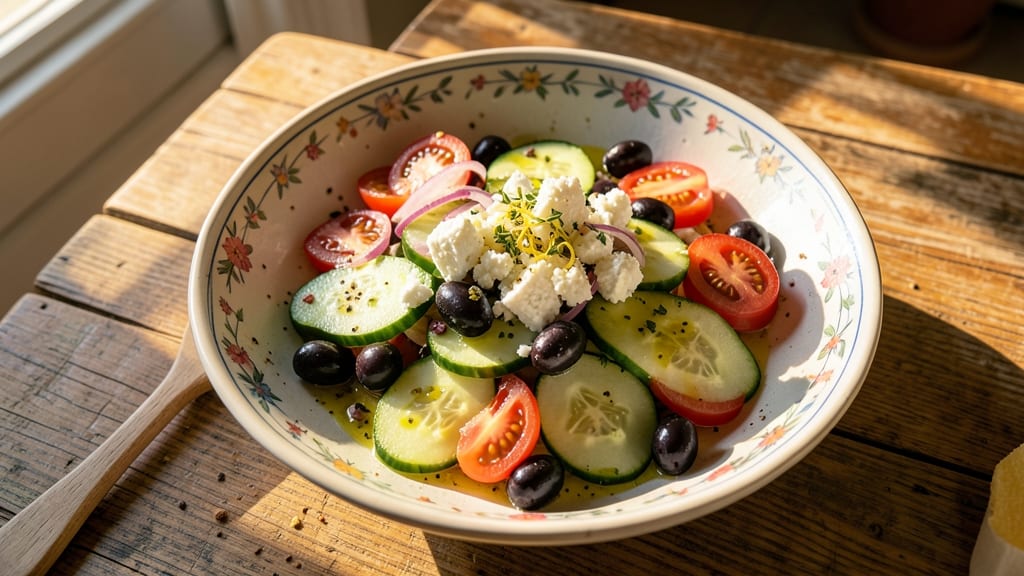
Athenian salad brings the sun-drenched flavors of Greece to your table with its perfect balance of crisp cucumbers, ripe tomatoes, and salty feta. This traditional Greek dish, known as Horiatiki, celebrates freshness and simplicity—just five core ingredients that transform into a vibrant, refreshing meal.
The secret lies in the quality of ingredients and the gentle dressing that enhances rather than overwhelms.
What makes this salad truly special is its ability to transport you to the streets of Athens with every bite. The cucumbers stay crisp, the tomatoes burst with juiciness, and the feta provides that signature salty tang.
A drizzle of extra-virgin olive oil and a sprinkle of dried oregano elevate the flavors to restaurant-quality levels, all while keeping the preparation effortless.
This recipe delivers a dish that’s as visually stunning as it is delicious—bright green, red, and white layers that scream Mediterranean summer. The combination of textures and flavors creates a harmonious balance that’s both satisfying and light, perfect for hot days or as a refreshing starter for any meal.
Whether you follow the classic version or add a touch of red onion for extra depth, this Athenian salad is a celebration of Greece’s culinary traditions. Ready in just 15 minutes, it’s the ideal dish for those who appreciate bold flavors and minimal effort. Let’s get started!
Ingredients for athenian salad
Five core ingredients and a handful of finishing touches create this iconic Greek masterpiece.
| Ingredient | Amount | Notes |
|---|---|---|
| Persian Cucumbers 🥒 | 2 whole | Unpeeled, sliced into 1/2-inch rounds |
| Ripe Roma Tomatoes 🍅 | 3 whole | Quartered, seeds removed |
| Extra-Virgin Olive Oil 🫒 | ½ cup | High-quality, fruity variety |
| Feta Cheese 🧀 | 8 oz | Aged, crumbled into chunks |
| Red Onion 🧅 | 1 whole | Thinly sliced into half-moons |
| Fresh Kalamata Olives 🫒 | ½ cup | Pitted, halved lengthwise |
| Dried Oregano 🌿 | 1 tsp | Culinary-grade, not Mexican |
| Diamond Crystal Kosher Salt 🧂 | ½ tsp | Fine grain preferred |
| Fresh Dill 🌿 | 2 tbsp | Chopped, stems removed |
| Lemon Juice 🍋 | 1 tbsp | Freshly squeezed |
The quality of your vegetables makes all the difference in a proper Athenian salad. Persian cucumbers are ideal—they stay crisp without turning soggy, unlike English varieties. Look for tomatoes that yield slightly when gently squeezed; Roma tomatoes are perfect for their sweetness and lower water content. Whole Foods Market or local farmers' markets typically carry the best produce. For the feta, seek out aged blocks from trusted brands like Kalantzakos or Feta Village—pre-crumbled varieties often contain anti-caking agents that ruin the texture. If using red onion, soak the slices in ice water for 10 minutes before draining to mellow their sharpness.
No Kalamata olives? Green olives or even capers can stand in, though they’ll alter the flavor profile. Swapping feta for a vegan alternative? Violife or Follow Your Heart brands offer decent substitutes, though texture will differ. Short on fresh dill? Dried oregano at half the amount works in a pinch, but fresh is ideal. The olive oil should be extra-virgin with noticeable fruitiness—Colavita or California Olive Ranch are reliable choices. For extra depth, add a pinch of red pepper flakes if you enjoy a subtle heat. Every ingredient should be at room temperature before combining to ensure even distribution of flavors.
This salad thrives on freshness but can be prepped ahead with strategic timing. Store components separately in airtight containers in the fridge for up to 24 hours—assemble just before serving to preserve crispness. The dressing (olive oil, lemon juice, oregano, and salt) can be made up to 3 days in advance and stored separately. For best presentation, arrange ingredients in concentric circles on a large platter, with feta and olives forming the centerpiece. Garnish with fresh dill just before serving to maintain vibrant color. Leftovers keep for 2 days if stored properly, though texture may soften slightly.
Why You'll Love This Recipe
- No-Chop Nightmare: I swear by this—just slice the cucumbers and tomatoes once, then let them sit. The onions? Thinly sliced, so they soften just enough without disappearing. Honestly, it’s the kind of salad that makes me feel like I’ve earned my dinner while still being ready in 15 minutes.
- Crispy-Creamy Magic: That first bite? The Persian cucumbers stay shockingly crisp, while the juicy Roma tomatoes burst with sweetness. Then there’s the feta—salty, briny, and just crumbly enough to make you want to eat it with your hands. Between us, I’ve never met a salad that balances textures like this one.
- Packable Anywhere: I take this to picnics, potlucks, or even work lunches—it holds up perfectly for days. The olive oil keeps it fresh, and the feta doesn’t get soggy if you pack it in a sealed container. (Yes, even on a Tuesday night when I forget to eat.)
- Budget Bright Spot: Red onions and Roma tomatoes are cheap, and a block of feta lasts forever if you store it right. I make a big batch on Sundays, and it stretches across the week without costing me an arm. Plus, the olive oil? A little goes a long way—no waste, just flavor.
Step-by-step instructions for Athenian salad
This classic Greek salad balances textures and flavors through precise preparation and assembly.
Prepare the Vegetable Components
Begin with the cucumbers - slice the 2 whole Persian cucumbers into ½-inch rounds, leaving the skin on for texture. I use a sharp chef's knife and cut them into even pieces to ensure consistent mouthfeel throughout the salad. The cucumbers should be firm but not overly crisp; this variety naturally holds its shape when combined with the other ingredients.
Next, quarter the 3 whole ripe Roma tomatoes, carefully removing the seeds with a small spoon. The tomatoes should be firm with just a slight give when pressed - this ensures they won't turn mushy when combined with the dressing. Thinly slice the 1 whole red onion into half-moons, then immediately place the onion slices in a bowl of ice water for 5 minutes to mellow their sharpness while you prepare the remaining ingredients.
Crumble the Feta and Halve the Olives
Using your hands, crumble the 8 oz aged feta cheese into chunks about ½-inch in size. I prefer using my fingers for this as it creates more irregular pieces that hold together better in the salad. Avoid pressing too hard or the feta will turn into a paste. Halve the 0.5 cup fresh Kalamata olives lengthwise - their dark purple color and briny flavor will anchor the salad's flavor profile.
Drain and pat dry the onion slices after their ice bath, then transfer them to a large mixing bowl. Add the prepared cucumbers, tomatoes, and halved olives to the bowl. The vegetables should be at room temperature before dressing - this prevents the salad from becoming watery when combined with the olive oil.
Create the Dressing and Combine
In a small bowl, whisk together the 0.5 cup extra-virgin olive oil, 1 tbsp freshly squeezed lemon juice, 1 tsp dried oregano, and 0.5 tsp Diamond Crystal kosher salt. The dressing should emulsify naturally - if it separates, whisk vigorously for 30 seconds until it becomes a smooth, golden liquid. I find using a fruity olive oil variety here makes all the difference in the final flavor.
Pour the dressing over the vegetable mixture and gently toss with a large spoon, being careful not to bruise the tomatoes or cucumbers. The salad should be well-coated but still retain its individual components. Let it rest for 10 minutes before serving - this allows the flavors to meld and the dressing to penetrate the vegetables evenly.
Finish with Fresh Herbs and Final Adjustments
Just before serving, sprinkle the 2 tbsp chopped fresh dill evenly over the salad. The bright green color and citrusy flavor provide a perfect contrast to the other components. I like to distribute the dill in small clusters rather than spreading it evenly - this creates visual interest while maintaining the salad's traditional presentation.
Taste the salad and adjust seasoning if needed. The dressing should be balanced - slightly tangy from the lemon, with enough salt to enhance all components without overpowering. The feta should be prominent but not dominant, and the olives should provide a briny contrast to the fresh vegetables. Serve immediately while the vegetables are still crisp and the dressing is at its peak flavor.
Pro Tips For Making Athenian Salad
- CHILL THE CUCUMBERS: Toss Persian cucumbers in ice water for 10 minutes before slicing—cuts bitterness and keeps them crisp. I learned this the hard way after serving salad with rubbery cucumbers that tasted like regret.
- SALT THE TOMATOES: Sprinkle sliced Roma tomatoes with ½ teaspoon salt and let sit for 15 minutes before adding to the salad. This softens them slightly and draws out their sweetness—trust me, it’s worth the wait.
- DICE THE ONION DRY: Pat red onion slices dry with a paper towel before dicing, then toss with a pinch of salt immediately. Wet onions release water and dilute flavors—this keeps your salad bright and sharp.
- UPGRADE WITH OLIVE OIL: Use a high-quality extra-virgin olive oil (look for a peppery finish) and drizzle it over the salad after assembling. A cheap oil will make the whole dish taste flat—don’t skimp, even if it’s just salad.
Essential equipment for this dish
Knife Essentials
Start with a sharp chef's knife (8-inch) for chopping cucumbers and tomatoes—I swear by the Mercer Culinary Genesis for its razor-sharp edge that stays put. A serrated knife (like Victorinox Swiss Classic) is perfect for halving olives without crushing them.
For precision with onions, a slicing knife (6-inch) with a thin blade gives clean, even half-moons. 🔪
Cutting Boards
Use a large cutting board (12x18 inches) made of end-grain wood like Teak or Maple—it's gentle on knives and prevents slipping. For extra stability, I place a damp towel underneath to catch any juices.
Avoid plastic boards; they dull knives quickly and can harbor bacteria. A small board (8x12 inches) works for feta crumbling to keep your workspace tidy.
Mixing Tools
A large mixing bowl (8-quart capacity) is essential for combining ingredients without spills. I prefer stainless steel (like Ozeri Touch Mixing Bowls) for durability and easy cleanup.
For the dressing, a small whisk bowl (2-cup) helps emulsify the olive oil perfectly. A slotted spoon (8-inch) is great for serving without breaking up the salad's texture.
Storage Containers
For prepping ahead, use glass airtight containers (like Pyrex Simply Store) to keep components fresh. The cucumbers and tomatoes go in one container, while feta and olives get their own to prevent sogginess.
A small jar (8-ounce) with a tight lid stores the dressing separately for up to 3 days. 🥫
Presentation Platter
Serve on a large ceramic or slate platter (14-inch diameter) for that authentic Greek taverna look. The natural stone texture complements the salad's vibrant colors. For easy transport, a wooden serving board (like West Elm's Acacia) works beautifully at picnics or gatherings.
Nutrition facts
Frequently asked questions
What makes this Athenian salad different from Greek salad?
This traditional dish, called Horiatiki, skips ingredients like lettuce, peppers, and sometimes onions to highlight the Mediterranean's core flavors. The key difference is its simplicity—just tomatoes, cucumbers, feta, olives, and olive oil. The absence of greens keeps the focus on the fresh vegetables' natural sweetness and the briny feta.
Can I make this salad ahead of time?
Yes, but with caution! Store components separately in airtight containers for up to 24 hours—assemble just before serving to preserve crispness. The dressing can be made up to 3 days ahead and stored separately. Combine everything 10 minutes before eating for the best texture and flavor balance.
What's the best way to crumble feta for this salad?
Use your hands to break the cheese into ½-inch chunks—don't press too hard or it'll turn into a paste. For extra authenticity, look for aged feta blocks from brands like Kalantzakos. The irregular pieces hold together better in the salad and create satisfying texture contrasts with the other ingredients.
Can I substitute any ingredients if I can't find the traditional ones?
Swap Persian cucumbers for English cucumbers (peeled), Roma tomatoes for beefsteak (remove excess seeds), and Kalamata olives for green olives or capers. For feta, try vegan alternatives like Violife, though texture will differ. The key is maintaining the salad's fresh, bright character—never use canned tomatoes or pre-shredded cheese.
How do I prevent my salad from getting watery?
Pat all vegetables dry before assembling, use room-temperature ingredients, and avoid over-tossing. The dressing should coat lightly—add olive oil gradually until just combined. For extra insurance, let the salad rest 10 minutes before serving to allow excess moisture to drain away.