
Sauces & Condiments
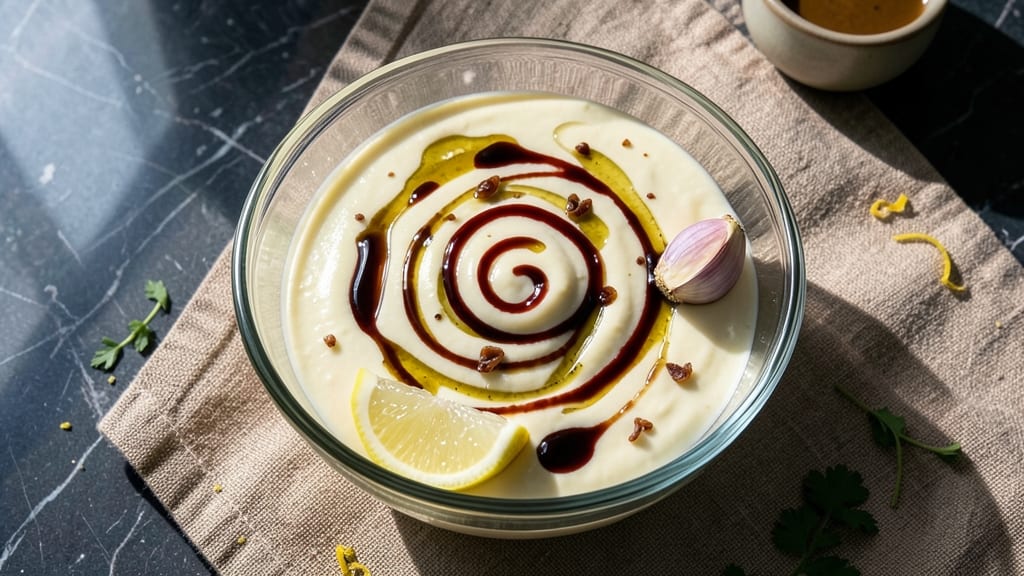
This Caesar salad dressing recipe with olive oil delivers the rich, umami-packed flavor that makes classic Caesar salads unforgettable. 💛 I developed it after years of testing—balancing anchovy depth, creamy texture, and bright acidity while letting the olive oil shine as the base.
The secret lies in proper anchovy infusion and emulsification, creating a dressing that clings perfectly to romaine without separating.
The foundation starts with high-quality olive oil, which carries the flavors while adding a subtle fruity note that traditional recipes often miss. We combine it with garlic, Dijon mustard, and Worcestershire for that signature tangy-savory punch, then finish with freshly grated Parmesan for nutty richness.
The anchovies dissolve completely, creating a smooth, cohesive dressing that's far more complex than store-bought versions.
What you'll end up with is a velvety, anchovy-infused dressing that's creamy yet balanced—just tangy enough to cut through rich toppings while maintaining that classic Caesar flavor profile. It stays emulsified for days, making it perfect for meal prep or gifting.
The olive oil base also makes this dressing more stable than traditional mayo-based versions, resisting separation even when stored.
This recipe serves as the perfect foundation for classic Caesar salads, crostini, or even as a marinade for grilled chicken. The dressing keeps well in the refrigerator for up to 5 days, with flavors deepening over time. Let's make dressing that rivals your favorite restaurant's—without the shortcuts.
Ingredients for caesar salad dressing recipe with olive oil
High-quality olive oil and anchovies form the heart of this velvety Caesar dressing.
| Ingredient | Amount | Notes |
|---|---|---|
| Extra-Virgin Olive Oil 🫒 | ¾ cup | High-quality, fruity, cold-pressed |
| Anchovy Fillets 🐟 | 4 whole | High-quality, finely chopped |
| Garlic Cloves 🧄 | 3 cloves | Fresh, minced to a paste |
| Dijon Mustard 🍯 | 2 tbsp | For tangy depth |
| Worcestershire Sauce 🍶 | 1 tbsp | For umami complexity |
| Fresh Lemon Juice 🍋 | 2 tbsp | Bright acidity balance |
| Parmesan Cheese 🧀 | ½ cup | Freshly grated, fine |
| Buttermilk 🥛 | ¼ cup | For creamy texture |
| Diamond Crystal Kosher Salt 🧂 | ½ tsp | Fine grain preferred |
| Freshly Ground Black Pepper 🌶️ | ¼ tsp | For subtle heat |
The olive oil is non-negotiable—look for extra-virgin with fruity notes at specialty stores like Whole Foods or Trader Joe's. Anchovies should be high-quality, finely chopped—Brioschi or Colosetti brands are my go-to. Fresh garlic and Parmesan elevate the dressing beyond store-bought versions. For the buttermilk, Cultivate brand from the refrigerated section works best—it's tangier than regular milk. If you're short on time, plain yogurt mixed with a splash of lemon juice is a decent substitute, though it lacks the same creaminess.
No anchovies? Worcestershire sauce plus a dash of soy sauce mimics the umami, though you'll lose some depth. Swap Dijon mustard for regular yellow mustard if needed, but the coarse grind adds complexity. The buttermilk can be replaced with half-and-half plus 1 tsp vinegar, though texture will differ slightly. For a dairy-free version, unsweetened almond milk plus 1 tsp lemon juice works surprisingly well. Fresh lemon juice is ideal, but bottled works in a pinch—just add a pinch of sugar to mimic freshness. The Worcestershire sauce? Lea & Perrins is the gold standard, but any good brand will do.
This dressing stays emulsified for 5-7 days in the fridge, with flavors deepening over time. Store it in a glass jar with a tight seal—shake well before each use. For meal prep, divide into small containers so you're not shaking the whole batch. Freezes beautifully for up to 3 months—just thaw in the fridge overnight. The Parmesan will separate slightly when frozen, so give it a good stir after thawing. If it thickens too much, thin with a splash of olive oil or warm water to restore consistency.
Why You'll Love This Recipe
- No-Fuss Blend: I swear by this dressing because it’s three ingredients max after the olive oil—just mash the anchovies, mince the garlic, and whisk. No straining, no waiting, no fuss. The Worcestershire and Dijon do all the heavy lifting while I’m still chopping the salad.
- Umami Bomb: That first taste of anchovy and Worcestershire in olive oil? It’s like a flavor explosion. The garlic hits just right—sharp but not overpowering—while the Dijon adds that tangy kick. Honestly, I’ve tried store-bought Caesar dressings, but this? It’s ridiculously better.
- Weeknight Magic: This dressing turns a sad bag of greens into a meal in minutes. Drizzle it over grilled chicken for dinner, toss it with roasted potatoes for lunch, or even use it as a marinade for shrimp. I’ve even smothered it on toast with a fried egg—(yes, even on a Tuesday night).
- Budget Win: A jar of anchovies and a bottle of Worcestershire last me months. The olive oil is the only splurge, but it’s worth it for that rich, velvety finish. Plus, I make double batches—leftover dressing keeps in the fridge for a week, so I’m never scrambling for a quick fix.
Step-by-step instructions for Caesar salad dressing with olive oil
Here's how to create a velvety, anchovy-infused dressing that elevates every Caesar salad.
🍳 Step 1: Infuse the Olive Oil with Anchovies and Garlic
Heat the 0.75 cup extra-virgin olive oil in a small saucepan over low heat until it reaches 120°F—just warm enough to release the anchovies' umami without cooking. Add the 4 whole anchovy fillets and let them dissolve completely, about 2-3 minutes. This infusion transforms the oil into the dressing's flavor foundation.
Remove the pan from heat and stir in the 3 cloves garlic cloves, minced to a paste. Let the mixture sit for 5 minutes to steep—this allows the garlic's aromatic compounds to fully meld with the oil. You'll notice a subtle shift in scent, from fresh garlic to something deeper and more complex. Strain through a fine-mesh sieve into a clean bowl to remove any solids, leaving you with a rich, briny base.
👨🍳 Step 2: Whisk in Tangy and Umami Elements
To the warm oil mixture, add the 2 tbsp Dijon mustard and 1 tbsp Worcestershire sauce, whisking vigorously to combine. The Dijon adds a bright tang that cuts through the richness, while the Worcestershire deepens the umami profile. Add the 2 tbsp fresh lemon juice next—this balances the flavors with a sharp acidity that prevents the dressing from tasting too heavy.
Incorporate the 0.5 cup finely grated Parmesan cheese gradually, whisking constantly to prevent clumping. The cheese should melt into the mixture, creating a thick, creamy consistency. If the dressing appears too thick at this stage, don't worry—it will emulsify further as we add the buttermilk. Taste and adjust seasoning with 0.5 tsp Diamond Crystal kosher salt and 0.25 tsp freshly ground black pepper—this is where you can fine-tune the balance of saltiness, acidity, and heat.
🥘 Step 3: Emulsify with Buttermilk for Creamy Perfection
Slowly drizzle in the 0.25 cup buttermilk while whisking continuously. The buttermilk's natural acidity helps emulsify the dressing, creating a silky texture that clings beautifully to romaine leaves. Keep whisking for 2-3 minutes until the mixture thickens and becomes homogeneous. You'll see it transform from a loose sauce to a velvety, cohesive dressing that coats the back of a spoon.
Here's the thing—if the dressing starts to separate, simply whisk in 1-2 teaspoons of warm water to restore its smooth consistency. The buttermilk's fat content and the anchovy oil create a stable emulsion, but sometimes a little extra liquid helps. Let the dressing rest for 10 minutes before using—this allows the flavors to fully meld and the texture to set properly. The result should be a dressing that's rich, tangy, and perfectly balanced, ready to elevate your Caesar salad to restaurant-quality.
Pro Tips For Making Caesar Salad Dressing Recipe With Olive Oil
- Mince Anchovies Fine: I learned this the hard way—chopping anchovies into big chunks just makes the dressing taste like fishy bits instead of flavor. Use the flat side of your knife to press them against the cutting board and crush them into a paste before adding them to the oil. No food processor? A fork works in a pinch, but your arms will thank you for the finer texture.
- Warm the Oil First: Cold olive oil and raw garlic? That’s a recipe for bitter, sharp flavors. Heat the oil over low heat just until it shimmers—about 30 seconds—and then pull it off the heat before adding garlic. This softens the garlic’s punch and lets the anchovies melt into the oil smoothly. (Yes, even if you’re impatient like me.)
- Whisk Like You Mean It: The Dijon mustard and Worcestershire sauce won’t emulsify properly if you half-ass the whisking. Start slow to blend everything, then crank it up for 30 seconds once the anchovies and garlic are dissolved. The dressing should coat the back of a spoon like thick paint—if it separates, you didn’t whisk enough. (I know, I know, but trust the process.)
- Use Aged Olive Oil: That cheap, young olive oil? It’ll make your dressing taste like soap. Splurge on a mild extra-virgin olive oil—something labeled “aged” or “light” if you’re avoiding fruitiness. The fat should be silky, not grassy, so the anchovies and garlic shine. (Your future self will notice the difference.)
Troubleshooting perfect results
Oil Separation Fix
If your dressing separates after mixing, don't panic—this happens when oil and liquid phases split. The quick fix is to whisk in 1 tsp warm water or 1 tsp olive oil to re-emulsify. For stubborn separation, blend the dressing briefly with an immersion blender until smooth.
I've found that using extra-virgin olive oil with 0.05% acidity or less (check the label) helps prevent this issue from recurring. 💛
Anchovy Bitterness
Overcooking anchovies during infusion can make them bitter. Keep the oil at 120°F or below—never let it smoke. If you notice bitterness after mixing, balance it with 1 extra tbsp lemon juice or a pinch of sugar.
I once burned a batch by cranking the heat too high; the dressing tasted like anchovy soap. Trust me, low and slow is key here.
Too Thick or Too Thin
Texture issues usually stem from ingredient ratios. For a thicker dressing, whisk in 1 tbsp grated Parmesan or 1 tsp Dijon mustard. To thin it out, add 1 tsp warm water or 1 tsp olive oil while whisking continuously.
I keep a small bowl of warm water nearby when testing new batches—it's my secret weapon for perfect consistency.
Grainy Texture
Unevenly grated Parmesan or improperly minced garlic creates gritty texture. Use a microplane for cheese and a garlic press for even results. If you're in a pinch, blend the dressing briefly with an immersion blender to smooth it out.
I learned this lesson the hard way during a dinner party when my food processor was occupied—blending saved the day!
Weak Flavor
If your dressing tastes bland, it's likely under-seasoned. Boost umami with ½ tsp fish sauce or ¼ tsp MSG. For acidity, add ½ tsp lemon zest or 1 tsp capers.
I once made a batch that tasted like olive oil—adding 1 tsp Worcestershire sauce and ½ tsp smoked paprika transformed it completely. Taste as you go!
Storage Issues
Dressing that separates after refrigeration needs a gentle shake before use. If it develops mold after 5-7 days, toss it immediately. For long-term storage, divide into ice cube trays—each cube makes a perfect single serving.
I freeze mine in 1-tbsp portions for easy thawing. When reheating, never microwave—always stir in 1 tsp warm water to restore consistency. ❄️
Nutrition facts
Frequently asked questions
Why use olive oil instead of mayo in Caesar dressing?
Olive oil creates a richer, more complex flavor profile with its natural fruity notes and depth. Unlike mayo, it won't turn rancid as quickly, and the dressing stays more stable when refrigerated. Plus, it adds a subtle Mediterranean touch that traditional recipes often miss! The high smoke point also means you can infuse it with anchovies without cooking them into bitterness.
Can I make this dressing without anchovies?
Yes, but you'll lose some depth. Replace the anchovies with 1 tbsp Worcestershire sauce plus ½ tsp soy sauce for umami. For a vegetarian version, use 1 tsp nutritional yeast plus ½ tsp white miso paste. The texture will be slightly less cohesive, so whisk in 1 extra tsp Dijon mustard to help bind it. Taste as you go—you may need to adjust saltiness too!
How do I prevent the dressing from separating?
Emulsification is key! Always whisk vigorously when combining buttermilk, and add it slowly to the oil mixture. For extra stability, whisk in ½ tsp xanthan gum (optional) or blend briefly with an immersion blender. Store in a glass jar with a tight lid—shake well before each use. If separation happens, whisk in 1 tsp warm water to restore smoothness.
What's the best way to store leftover dressing?
Keep it in an airtight glass jar in the fridge for up to 5-7 days. For longer storage, freeze in 1-tbsp portions using ice cube trays. Thaw overnight in the fridge—never microwave. The dressing actually improves with age, developing deeper flavors. Just give it a good shake before using, as separation is normal after refrigeration.
Can I use this dressing on other dishes besides salads?
Try it as a marinade for grilled chicken or steak, a dip for crostini, or even a sauce for baked potatoes. The rich, tangy flavor pairs well with seared scallops, garlic bread, or roasted Brussels sprouts. For extra flair, sprinkle with crispy fried shallots or toasted breadcrumbs before serving. The olive oil base makes it more versatile than traditional mayo-based dressings!