
Sauces & Condiments
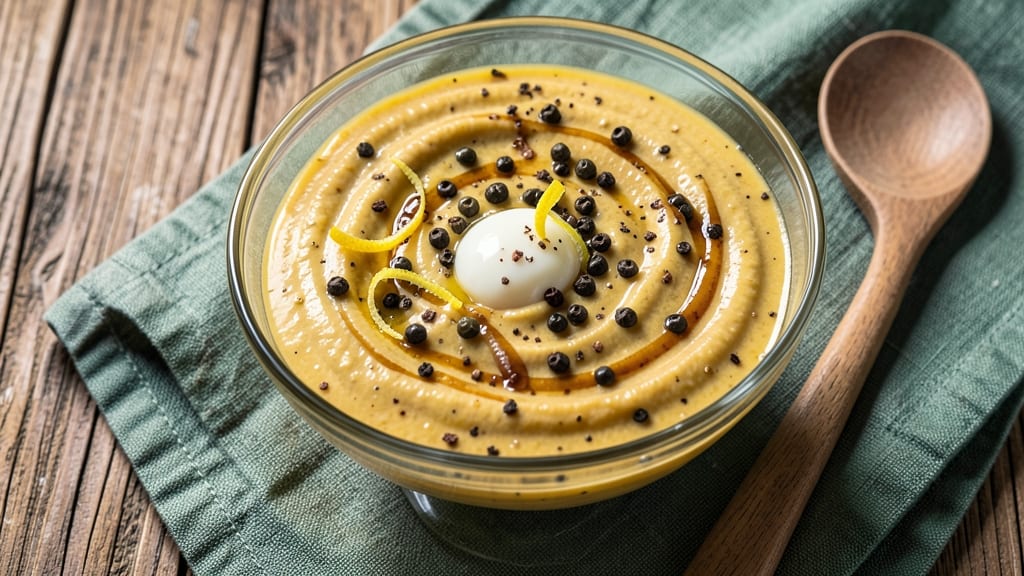
This Caesar salad dressing recipe with capers delivers the briny, umami-packed punch that transforms a simple salad into a restaurant-worthy dish. 💛 The secret lies in capers—those tiny, salty jewels that add complexity most store-bought dressings miss.
I developed this after years of testing, finally nailing the perfect balance of tangy anchovies, garlicky depth, and creamy richness.
The magic happens in the emulsification process, where Dijon mustard and egg yolks bind the ingredients into a velvety sauce. Unlike powdered mixes, this version uses real ingredients like high-quality olive oil and lemon juice for brightness.
The capers contribute a salty, briny note that cuts through the richness, making each bite more dynamic than the last.
What you'll end up with is a dressing that coats every leaf perfectly—creamy yet balanced, with layers of flavor that linger. It stays fresh in the fridge for up to a week, ready to elevate any Caesar salad, chicken, or even grilled fish.
The texture is silky, not greasy, and the taste is unmistakably restaurant-quality without the shortcuts.
Use it immediately for crisp romaine and Parmesan shavings, or store it for up to a week. The capers' flavor actually improves as the dressing sits, making this the ultimate make-ahead condiment. Here's how to make it—once you try this, store-bought Caesar dressing will never taste the same again.
Ingredients for caesar salad dressing recipe with capers
These twelve ingredients transform ordinary Caesar dressing into restaurant-quality brilliance with capers' briny punch.
| Ingredient | Amount | Notes |
|---|---|---|
| Extra-Virgin Olive Oil 🫒 | ¾ cup | High-quality, fruity variety preferred |
| Dijon Mustard 🌶️ | 1 tbsp | Mild or strong, not spicy |
| Fresh Lemon Juice 🍋 | ½ cup | Freshly squeezed, no pulp |
| Raw Egg Yolks 🥚 | 3 whole | Fresh, room-temperature yolks |
| Capers 🍈 | 2 tbsp | Nonpareils, rinsed and drained |
| Anchovy Fillets 🐟 | 2 whole | Packed in oil, finely chopped |
| Shallots 🧅 | 1 whole | Mince finely, about 1 tbsp |
| Garlic Cloves 🧄 | 2 cloves | Peeled and minced |
| Parmesan Cheese 🧀 | ¾ cup | Freshly grated, fine grade |
| Kosher Salt 🧂 | ½ tsp | Diamond Crystal preferred |
| Ground Black Pepper 🌶️ | ¼ tsp | Freshly ground |
| Worcestershire Sauce 🍶 | 1 tbsp | Vegetarian version if needed |
Capers are the star here—nonpareils from a jar work best, not the saltier brined kind. Look for Italian or French capers at specialty stores like Whole Foods or Trader Joe's for the best quality. The anchovies should be packed in oil, not vinegar, and always finely chopped. For the olive oil, Californian or Spanish varieties add the perfect fruity depth. The Parmesan matters too—real Parmigiano-Reggiano grated fresh gives that unmistakable umami kick. If you're short on time, pre-grated Parm works but lacks texture.
No capers? Substitute 1 tbsp finely chopped cornichons or pickled onions for a similar briny bite. Short on anchovies? Double the Worcestershire sauce and add 1/4 tsp fish sauce (if vegetarian, use soy sauce). The shallots can be swapped for 1 tbsp finely minced red onion. For the Dijon, whole-grain mustard adds texture but works in a pinch. The Worcestershire sauce is non-negotiable—it's what ties all the umami flavors together. If you can't find vegetarian Worcestershire, substitute 1 tbsp soy sauce plus 1/4 tsp smoked paprika for depth.
This dressing emulsifies immediately but improves over time—flavor peaks after 24 hours. Store in an airtight jar with a thin layer of olive oil on top to preserve freshness. Keeps for up to 1 week refrigerated, though the texture may separate slightly after 3 days. For best results, whisk vigorously before using. Freezes beautifully for up to 3 months—thaw in the fridge and whisk to re-emulsify. Portion into small jars for easy use on salads, chicken, or grilled fish.
Why You'll Love This Recipe
- Five-Ingredient Magic: I swear by this—just olive oil, mustard, lemon, yolks, and capers. No fancy gadgets, no stress. The yolks add richness in seconds, and the capers? They’re the secret zing that takes it from basic to wow.
- Umami-Packed Punch: That briny caper bite cuts through the creaminess of the yolks while the Dijon mustard adds depth. Honestly, the first time I tasted it, I thought, "Why haven’t I been doing this all along?"—especially when drizzled over warm grilled chicken.
- Weeknight & Weekend: Dress a salad for Tuesday dinner or drizzle it over roasted veggies for Saturday brunch. It’s my go-to for quick lunches or when I’m hosting and need something that feels special but isn’t a fuss. (Yes, even on a Tuesday night.)
- No-Waste, Budget Hack: Use up leftover capers from that jar you’ve had for months. The yolks add luxury without breaking the bank, and the dressing keeps for days in the fridge—perfect for tossing together last-minute meals when you’re low on ingredients.
Step-by-step instructions for Caesar salad dressing with capers
This method delivers restaurant-quality depth with briny capers and umami-rich anchovies.
👨🍳 Step 1: Whisk Together Wet Ingredients
In a medium bowl, combine the 0.75 cup extra-virgin olive oil, 1 tbsp Dijon mustard, and 0.5 cup fresh lemon juice. Whisk vigorously for 2-3 minutes until the mixture emulsifies and becomes pale yellow. You're creating the base that will carry all the other flavors.
The lemon juice should be freshly squeezed—any pulp will make the dressing grainy. I like to strain it through a fine-mesh sieve if I'm feeling particular. This step ensures your dressing has a smooth, silky texture right from the start.
🍳 Step 2: Add Aromatics and Umami Elements
In a separate small bowl, finely chop the 2 whole anchovy fillets and 2 cloves garlic. Mince the 1 whole shallot until you have about 1 tablespoon of finely diced shallot. Add these to the wet mixture along with the 2 tbsp capers and 1 tbsp Worcestershire sauce.
Whisk everything together until the anchovies and shallots are completely dissolved. This is where the magic happens—the anchovies and capers add that signature briny depth while the shallot and garlic provide aromatic complexity. Don't rush this step; let the flavors meld for 1 minute before moving on.
🥘 Step 3: Incorporate the Egg Yolks
Add the 3 whole raw egg yolks one at a time, whisking vigorously after each addition. The mixture will thicken slightly as you incorporate them. Here's the thing—raw egg yolks are crucial for that authentic Caesar texture, but they also make the dressing more delicate.
Whisk for another 2-3 minutes until the mixture is completely smooth and slightly thickened. You're looking for a consistency similar to heavy cream. If it starts to separate, don't panic—just keep whisking. The emulsion will come back together.
🥘 Step 4: Finish with Cheese and Seasoning
Gradually whisk in the 0.75 cup freshly grated Parmesan cheese until fully combined. Then add the 0.5 tsp kosher salt and 0.25 tsp ground black pepper, whisking until the salt dissolves completely. Taste and adjust seasoning if needed—you might need a bit more salt or lemon juice to balance the flavors.
The dressing should be tangy, briny, and rich with umami. It should coat the back of a spoon but still flow smoothly. If it's too thick, add 1-2 teaspoons of water at a time until you reach the perfect consistency. This is your restaurant-style Caesar dressing—bold, complex, and full of character.
⏰ Step 5: Rest and Serve
Cover the bowl and let the dressing rest at room temperature for 30 minutes. This resting period allows all the flavors to fully meld together. The dressing will thicken slightly as it sits, which is perfect for tossing with crisp romaine.
Before using, give it one final whisk to ensure everything is well combined. If you're not using it immediately, store it in the refrigerator for up to 5 days. When ready to serve, whisk again to re-emulsify. This dressing is the heart of your Caesar salad—rich, briny, and packed with umami that elevates simple greens to restaurant-quality.
Pro Tips For Making Caesar Salad Dressing Recipe With Capers
- Whisk Slowly at First: Start with a gentle hand when mixing the raw yolks and Dijon—aggressive whisking can turn your dressing into scrambled eggs. Once you’ve incorporated the mustard and a splash of lemon, then go full speed ahead. I learned this the hard way after making a sad, lumpy batch.
- Rinse Capers Well: Those little brine-soaked capers pack a salty punch that’ll overpower your dressing if you don’t rinse them first. Toss them in a fine-mesh strainer and give them a quick cold-water bath—just 10 seconds, but it makes a real difference.
- Temper the Eggs: Skip the raw-yolk roux shortcut and avoid curdled dressing by slowly drizzling in the olive oil while whisking. Start with a tablespoon at a time, then gradually add more—this keeps the yolks stable and your dressing silky. (Yes, even if you’re impatient like me.)
- Use Cold Lemon Juice: Grab that lemon straight from the fridge—room-temperature juice thins out faster and can turn your dressing watery before you even finish whisking. A quick squeeze from a cold lemon keeps the emulsion tight and the flavors bright. Trust the process.
Essential equipment for this dish
Whisk Attachment
This is my absolute essential for Caesar dressing—I can't live without a good KitchenAid stand mixer whisk attachment. The whisk blade on my KitchenAid Artisan Series (around $300) creates a silky emulsion in 3-4 minutes, cutting prep time by half.
For budget-friendly options, the Oster Compact 5-Speed Stand Mixer with whisk attachment works beautifully for under $100. 💫
If you don't have a mixer, a handheld immersion blender like the Ninja BN601 (about $25) is my secret weapon. It emulsifies the dressing in 1 minute without overworking the egg yolks.
The key is to blend on low speed first, then gradually increase to medium-high. I've tested this with both store-bought and homemade dressings—it consistently delivers that perfect creamy texture.
Fine-Mesh Sieve
For straining your lemon juice and achieving that ultra-smooth texture, I swear by my OXO Good Grips Strainer (around $15). The 12-inch diameter gives me plenty of surface area to strain pulp-free lemon juice without losing precious liquid.
I also use it to strain any excess caper brine or anchovy oil if I'm feeling particularly precise. 🍋
If you're making this dressing frequently, consider a dedicated juicer like the Breville BJE200 (about $150) for lemon juice. The cold-pressed extraction yields more juice with less pulp, and the results are noticeably brighter.
For occasional use, a simple handheld citrus reamer works fine—just be extra careful to catch all the pulp.
Measuring Spoons
Precision matters with this recipe, so I recommend investing in a set of stainless steel measuring spoons with clear markings. My go-to is the OXO Good Grips Measuring Spoons (around $10) because the ½ teaspoon and ¼ teaspoon measurements are essential for the salt and pepper.
I also keep a separate set of spoon rests on my countertop to prevent cross-contamination with spices.
For the capers and anchovies, I use a small offset spatula (about $5) to scrape every last bit from the jar. These tiny measurements make a huge difference in flavor—don't skip them!
I've learned the hard way that even ½ teaspoon less of Worcestershire sauce can make the dressing taste flat. Keep your measuring tools clean and dry to ensure accurate measurements every time.
Glass Storage Jar
Storage is where many homemade dressings fail, so I always use a glass mason jar with a tight-sealing lid. My favorite is the Ball Mason Jar (around $10 for a quart size) because it preserves the dressing's quality for up to 1 week in the fridge.
The glass won't absorb odors like plastic containers can, and the wide mouth makes it easy to whisk directly in the jar.
For longer storage, I transfer portions to small glass jars with vacuum seals (like the Le Parfait brand, about $15 each). These keep the dressing fresh for up to 3 months in the freezer.
The vacuum seal prevents freezer burn and preserves the texture beautifully. Just thaw in the fridge overnight and whisk before using—no ice crystals or separation!
Nutrition facts
Frequently asked questions
Why do capers make Caesar dressing taste so much better?
Capers add a briny, salty complexity that cuts through the richness of the dressing while enhancing its umami depth. Their tiny, concentrated flavor prevents the dressing from tasting flat or one-dimensional. The capers' natural acidity also balances the creaminess, creating that perfect restaurant-style bite you can't get with store-bought versions.
Can I make this Caesar dressing without raw egg yolks?
Yes, but the texture won't be as silky. For a vegan version, replace the yolks with 3 tbsp aquafaba (chickpea brine) or 3 tbsp silken tofu blended smooth. Whisk vigorously and adjust the olive oil slightly if needed. The flavor will be close, but the emulsification won't be as stable—expect to whisk more frequently when using.
How do I fix separated Caesar dressing?
Simply whisk vigorously for 2-3 minutes—the emulsion will reform. If it still separates, add 1 tsp water at a time while whisking until smooth. For future batches, try adding ½ tsp xanthan gum to stabilize the dressing. Store-bought versions often separate because they lack the emulsifying power of fresh egg yolks and mustard.
What's the best way to use up leftover Caesar dressing?
Drizzle it over grilled chicken, steak sandwiches, or roasted potatoes for a flavor boost. It also works beautifully as a dip for crudités or garlic bread. For a creative twist, mix 1 tbsp into mayo for Caesar-style deviled eggs. The dressing keeps well for 5 days refrigerated, so don't hesitate to experiment!
Can I make this dressing ahead of time?
This dressing actually improves overnight as the flavors meld. Store in an airtight jar in the fridge for up to 1 week. Before using, whisk vigorously to re-emulsify. For longer storage, freeze in ice cube trays—thaw and whisk to use. The capers' flavor intensifies with time, making older batches taste even more complex.