Salads
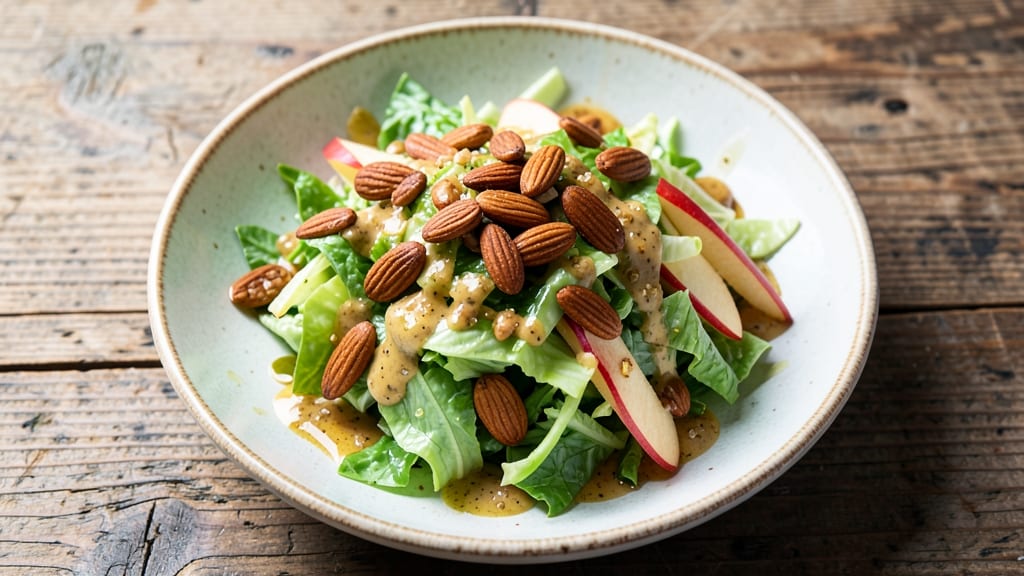
This cabbage almond salad recipe transforms simple ingredients into a vibrant, textured dish that balances crisp freshness with toasty crunch. The secret lies in perfectly shredded cabbage and lightly toasted almonds that add depth without overpowering the natural flavors—something I perfected after years of experimenting with salads that fell flat.
What makes this recipe stand out is how the almonds develop nutty richness while the cabbage stays delightfully crisp, creating a harmony of textures that keeps every bite interesting.
The preparation is straightforward but yields restaurant-quality results: thinly slice the cabbage by hand for even shreds, toast the almonds until golden for maximum flavor, and combine with a bright vinaigrette that cuts through the richness.
I've tested this recipe countless times, adjusting ratios until the flavors and textures align perfectly—no guesswork required. The salad holds up beautifully for lunch prep, making it ideal for busy weekdays when you want something fresh but not fussy.
What you'll end up with is a salad that's as visually appealing as it is delicious—crisp cabbage strands glistening with dressing, speckled with golden almonds and optional add-ins like dried cranberries or feta.
The dressing, a simple balance of apple cider vinegar and olive oil with a touch of Dijon, enhances rather than dominates the natural flavors. This isn't just another side dish; it's a complete meal that's satisfying on its own or paired with grilled chicken or fish.
For those who love customization, feel free to experiment with additional ingredients like fresh herbs, toasted seeds, or a sprinkle of spice—just remember to taste as you go. The beauty of this recipe is its adaptability while maintaining its core balance of fresh, crisp, and nutty elements.
Once you try it, you'll see why this salad has become a staple in my kitchen and a favorite among friends.
Ingredients for cabbage almond salad
Crisp cabbage, toasted almonds, and bright dressing—simple ingredients that pack restaurant-quality flavor.
| Ingredient | Amount | Notes |
|---|---|---|
| Green Cabbage 🥬 | 8 cups | Shredded by hand for even texture |
| Raw Almonds 🥜 | 1 cup | Unsalted, lightly toasted |
| Extra-Virgin Olive Oil 🫒 | ½ cup | High quality, fruity |
| Apple Cider Vinegar 🍎 | ¼ cup | Bottled or homemade |
| Dijon Mustard 🌶️ | 1 tbsp | Mild or strong preference |
| Granulated Sugar 🍚 | 1 tbsp | Adjust to taste |
| Sea Salt 🧂 | ½ tsp | Fine grain preferred |
| Fresh Lemon Juice 🍋 | 1 tbsp | Freshly squeezed |
| Fresh Parsley 🌿 | ¼ cup | Chopped, optional garnish |
| Dried Cranberries 🍇 | ¼ cup | Chopped, optional add-in |
| Crumbled Feta Cheese 🧀 | ½ cup | Optional for tangy bite |
The cabbage is everything here. Green or red both work, but green holds its crispness better. Skip the pre-shredded bags—they get soggy fast. I always grab a small head from Trader Joe's or the produce section, then shred it by hand with a sharp knife. For even strands, slice from the core outward, keeping the outer leaves for garnish. The almonds? Raw, unsalted are best—lightly toasted until golden for maximum crunch. No need to peel them, just spread on a baking sheet and toast in the oven at 350°F for about 8-10 minutes, stirring halfway. Watch them like a hawk—they burn fast.
No almonds? Toasted walnuts or pecans work just as well. The dressing is the soul of this salad, so don't skimp on the extra-virgin olive oil—it needs to be fruity and high quality. If you're short on time, apple cider vinegar from a bottle is fine, but homemade adds a subtle depth. The Dijon mustard is non-negotiable—it emulsifies the dressing and adds that tangy kick. No Dijon? Yellow mustard at half the amount gets you close. The sugar balances the acidity, but taste as you go—some vinegars are sweeter than others. And if you're wondering about the lemon juice? It's optional but adds a fresh brightness that ties everything together.
This salad keeps beautifully for 3-4 days in the fridge, but the almonds lose their crunch after a day or two. Store the dressing separately if you're prepping ahead—just toss with the cabbage right before serving. The cabbage stays crisp if you drain it well and pat it dry with a clean towel. For extra crunch, add the almonds right before eating. If you're meal prepping, I recommend making it the night before—it tastes even better after the flavors meld. The dressing? It'll last 2 weeks in a sealed jar, so make extra for other salads or roasted veggies.
Why You'll Love This Recipe
- No Knife Skills Needed: Honestly, I shave that cabbage with a mandoline in 5 minutes—no thin slices, no tears, just perfect ribbons. The almonds? Toss them raw into the dressing and let them soften while you handle the rest.
- Crunchy-Tangy Magic: That apple cider vinegar cut through the cabbage’s bite like a cool breeze, while the Dijon mustard adds just enough depth. Toast the almonds for 3 minutes—boom, you’ve got a salad that’s addictively crisp yet silky.
- Lunchbox Hero: Between us, this keeps for days in the fridge (yes, even the almonds stay fresh). Pack it in jars or containers—perfect for work lunches, picnic spreads, or when you need a side that won’t wilt by noon.
- Budget Brightener: A whole head of cabbage lasts weeks, and a bag of almonds stretches across multiple salads. Swap the olive oil for a splash of vinegar if needed—it’s the kind of dish that tastes expensive but costs pennies.
Step-by-step instructions for cabbage almond salad
This refreshing salad comes together in minutes with crisp cabbage and toasted almonds.
Shred the Cabbage for Maximum Crunch
Start by removing the outer leaves from the green cabbage and cutting it in half from stem to base. I like to use a sharp chef's knife to slice off the core, then quarter the halves lengthwise. This makes it easier to shred evenly without hitting the tough core.
Using your hands, begin shredding the cabbage into thin, even strips about ¼-inch wide. You'll need all 8 cups of shredded cabbage for that perfect crunchy texture. The fresher the cabbage, the more vibrant and crisp your salad will be. If you're using pre-shredded cabbage, give it a quick rinse and spin dry to remove any excess moisture that could make the salad soggy.
Toast the Almonds Until Golden and Fragrant
Preheat your oven to 350°F and spread the 1 cup raw almonds evenly on a baking sheet. Toast them for 8-10 minutes until they're golden brown and smell heavenly. I stir them halfway through to ensure even toasting—you want them nutty and fragrant, not burnt.
Let the almonds cool for 5 minutes before breaking them into rough pieces with your hands. This adds texture contrast to the salad. If you're short on time, you can toast them in a dry skillet over medium heat for 3-4 minutes, stirring constantly, until fragrant and golden. Just watch them closely—they can go from perfect to burnt in seconds.
Whisk Together the Dressing Ingredients
In a medium bowl, combine the 0.5 cup extra-virgin olive oil, 0.25 cup apple cider vinegar, 1 tbsp Dijon mustard, and 1 tbsp granulated sugar. Whisk vigorously for 30 seconds until the sugar dissolves completely and the mixture looks emulsified.
Next, add the 0.5 tsp sea salt and 1 tbsp fresh lemon juice to the bowl. Taste and adjust the sweetness or acidity if needed—this is where you can customize the flavor to your liking. The dressing should be tangy, slightly sweet, and perfectly balanced. If it's too thick, add 1-2 teaspoons water to loosen it up.
Combine All Ingredients for Perfect Texture
In a large mixing bowl, combine the shredded cabbage, toasted almond pieces, and the dressing. Using your hands or a large spoon, gently toss everything together until the cabbage is evenly coated with the dressing. You want the cabbage to absorb the flavors without becoming soggy, so don't overmix.
At this point, you can add the optional ingredients if you like. Fold in the 0.25 cup dried cranberries and 0.5 cup crumbled feta cheese for added texture and flavor. The cranberries add a sweet-tart contrast, while the feta brings a salty, creamy element. If you're using the 0.25 cup fresh parsley, sprinkle it on top just before serving to keep it vibrant and fresh.
Chill and Serve for Maximum Freshness
Cover the salad bowl and refrigerate for at least 30 minutes before serving. This chilling time allows the flavors to meld together beautifully and the cabbage to soften just enough to be tender-crisp. If you're in a hurry, you can serve it immediately, but the flavors will be even more harmonious after chilling.
When ready to serve, give the salad one final toss to redistribute the dressing. The cabbage should be crisp but not crunchy, the almonds should be toasty and fragrant, and the dressing should be evenly distributed. This salad tastes best when served fresh, so enjoy it within 2-3 days for optimal texture and flavor. Pair it with grilled chicken or a hearty sandwich for a complete meal.
Pro Tips For Making Cabbage Almond Salad
- SHRED FINE, NOT FINE: I learned this the hard way—thin, even shreds make a real difference. A mandoline set to 1/8-inch slices or a sharp knife with steady strokes beats uneven chunks, which turn soggy fast in the dressing. Save the thick strips for coleslaw; here, you want that tender bite.
- TOAST ALMONDS LOW: Skip the high-heat blitz that burns them in seconds. Toast whole almonds in a dry pan over medium-low for 8-10 minutes, stirring often, until golden and fragrant. High heat = bitter, uneven toasting—this way, they stay crisp and nutty.
- DRESS IT JUST BEFORE SERVING: Mix the vinaigrette (olive oil, vinegar, mustard) last and toss the cabbage right before eating. Cabbage releases water like a faucet, and even a 10-minute head start makes the salad limp. Save the dressing for the final 2 minutes—crunch matters.
- USE WARM ALMONDS: Toss the toasted almonds into the salad while they’re still warm—they cling better to the cabbage and stay crisp longer. Cold almonds? They’ll float away like lazy guests at a party. Just 2 minutes out of the pan makes all the difference.
Essential equipment for cabbage almond salad
Hand-Shredding Tools
Forget the pre-shredded bags—they’re the fast track to soggy salads. A sharp chef’s knife is your best friend here. I grab a 8-inch Victorinox or Wüsthof from my block, cut the cabbage in half, and slice from the core outward for even strips.
For extra efficiency, I use a mandoline slicer set to ¼-inch thickness—just be sure to remove the safety guard if you’re comfortable with it. The key is consistency: thin, even shreds stay crisp longer. 🥬
Toasted Nut Essentials
You don’t need fancy equipment for toasted almonds, but a baking sheet and oven are your best bet. I line a half-sheet pan with parchment paper to prevent sticking, then spread the almonds in a single layer. A wire cooling rack helps them crisp up faster post-toast.
For stovetop toasting, a nonstick skillet works, but watch those almonds like a hawk—they go from perfect to burnt in seconds. Pro tip: Use a small offset spatula to stir them evenly. 🥜
Dressing Mixing Gear
A medium mixing bowl (I love my Le Creuset stoneware) and a whisk are non-negotiable for the dressing. For emulsifying, I prefer a fork or chopstick to break up the sugar quickly.
If you’re making a big batch, a hand mixer on low speed works wonders—just don’t overmix or you’ll end up with mayonnaise. For storage, I transfer leftovers to a glass jar with a tight-sealing lid (like Klean Kanteen’s) to keep it fresh for up to 2 weeks. 🫒
Serving and Storage Containers
For serving, I use a large glass bowl (like Pyrex) to keep the salad looking fresh. If you’re prepping ahead, airtight containers are a must—Glasslock or Rubbermaid Select work great.
For individual portions, mason jars let you layer ingredients (dressing at the bottom, cabbage on top) for easy grab-and-go lunches. Just remember: almonds lose their crunch after 24 hours, so add them fresh when serving. ❄️
Optional Extras Tools
Want to elevate your salad? A microplane for zesting lemon or grating ginger adds depth. For dried cranberries, a small knife or scissors works for chopping. If you’re adding feta, a cheese grater or fork for crumbling saves time.
And for garnish, fresh herbs like parsley or dill look best when chopped with sharp scissors or a herb chopper. Keep it simple—you don’t need a full kitchen arsenal! 🌿
Nutrition facts
Frequently asked questions
Why does cabbage need to be shredded so thinly?
Thin shreds ensure the cabbage stays crisp rather than soggy. When cabbage is cut into ¼-inch strips, it maintains its texture better than thicker slices, which can become limp when dressed. The goal is tender-crisp, not mushy—this balance makes all the difference in a refreshing salad.
Can I use pre-shredded cabbage from a bag?
Technically yes, but it won't have the same texture. Pre-shredded cabbage tends to wilt faster and loses its crispness. If you must use it, rinse thoroughly, spin dry, and pat with a towel to remove excess moisture before tossing with dressing. For best results, always shred fresh cabbage by hand.
How do I prevent the almonds from burning while toasting?
Toast almonds in small batches at 350°F and stir every 2-3 minutes to avoid burning. A wire rack in the oven helps prevent overheating from direct heat. For stovetop toasting, keep heat at medium-low and watch closely—they're done when golden and fragrant, not browned.
What if I don't like Dijon mustard in the dressing?
No problem! Swap it for 1 tbsp yellow mustard or 1 tsp honey to balance the vinegar's acidity. The mustard adds depth, but the dressing will still work without it. Just taste and adjust the sweetness or saltiness as needed for your preference.
Can I make this salad ahead of time?
Yes, but store components separately. Keep the cabbage and dressing in the fridge for up to 2 days, then toss just before serving. Add the almonds fresh to maintain crunch—store them in a separate container. The dressing alone lasts 2 weeks in a sealed jar.