Salads
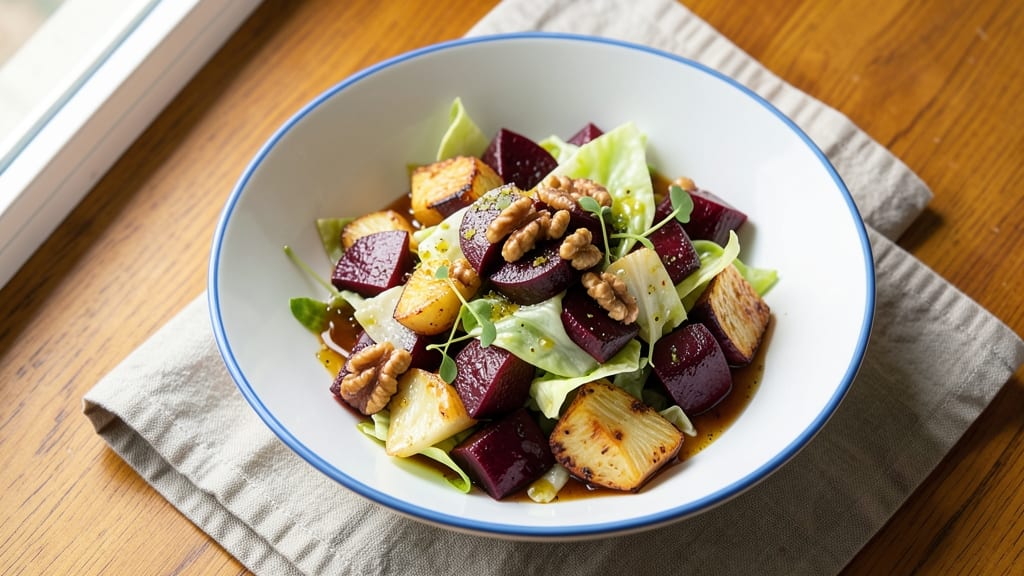
This beet and cabbage salad recipe transforms simple ingredients into a vibrant, earthy dish that balances sweetness and peppery crunch. Roasting the beets intensifies their natural sweetness while caramelizing the cabbage adds depth without overpowering the fresh elements.
The result is a salad that feels both comforting and refreshing—perfect for meal prep or a light lunch.
What sets this recipe apart is the careful balance of textures and flavors: tender roasted beets, crisp cabbage, and a tangy citrus vinaigrette that ties everything together.
The method is straightforward—no complicated techniques required—but the outcome is restaurant-quality. Each bite delivers a satisfying contrast between the creamy beets and the sharp, fresh cabbage.
The salad’s versatility makes it ideal for any occasion, whether served as a side dish or a main course with a sprinkle of toasted nuts or seeds. The roasting process enhances the beets’ sweetness while keeping the cabbage crisp, ensuring every component shines.
This dish proves that vegan salads can be just as rich and satisfying as their non-vegan counterparts.
Ready in under an hour, this salad keeps well for up to three days, making it a great option for busy weeks. The key is roasting the beets and cabbage together—this shared cooking time allows their flavors to meld beautifully.
Once assembled, the dressing binds everything into a cohesive, flavorful dish that’s as pleasing to the eye as it is to the palate.
Ingredients for beet and cabbage salad
Roasted beets and crisp cabbage meet vibrant citrus vinaigrette for a salad that balances earthy sweetness with peppery crunch.
| Ingredient | Amount | Notes |
|---|---|---|
| Medium Beets 🍠 | 2 whole | Medium size, peeled and cubed |
| Green Cabbage 🥬 | 4 cups | Shredded, outer leaves removed |
| Extra-Virgin Olive Oil 🫒 | ½ cup | For roasting and dressing |
| Fresh Lemon Juice 🍋 | ¼ cup | Freshly squeezed, strained |
| Maple Syrup 🍯 | 2 tbsp | Pure grade B for depth |
| Apple Cider Vinegar 🍶 | 1 tbsp | For tangy brightness |
| Dijon Mustard 🌶️ | 1 tsp | For vinaigrette depth |
| Salt 🧂 | 1 ½ tsp | Diamond Crystal preferred |
| Freshly Ground Black Pepper 🌶️ | ½ tsp | Freshly cracked |
| Toasted Walnuts 🥜 | ½ cup | Chopped, optional garnish |
| Fresh Thyme Leaves 🌿 | 1 tbsp | Chopped, optional garnish |
The beets are the heart of this dish—medium-sized ones roast evenly without turning mushy. Whole Foods or your local farmers market carry the most vibrant, sweet varieties. Avoid pre-cooked beets; their texture won't hold up to roasting. For cabbage, green varieties like Savoy add extra texture, but standard green cabbage works perfectly. Look for heads with crisp, unblemished leaves—Trader Joe's often has excellent quality at reasonable prices. The key to roasting is high heat: 425°F ensures caramelization without drying out the vegetables.
No maple syrup? Agave nectar works in a 1:1 ratio, though maple adds subtle depth. Substitute apple cider vinegar with white wine vinegar or rice vinegar for a different acid profile. For a nut-free option, toasted pumpkin seeds replace walnuts beautifully. The vinaigrette ratio is precise—don't skimp on the Dijon mustard, as it emulsifies the dressing. Fresh thyme can be swapped for dried thyme at one-third the amount, but fresh delivers brighter flavor. If your cabbage is particularly dense, massage it with 1 tbsp olive oil before roasting to soften it slightly.
Roasted vegetables keep 4-5 days in airtight containers, but the dressing should be made fresh daily for optimal flavor. Walnuts stay crisp for 1 week in the pantry, while fresh thyme lasts 5 days wrapped in damp paper towels. For meal prep, store components separately—roast and cool vegetables, then assemble with dressing just before serving. The salad reheats beautifully for 2-3 days if you prefer warm beets. Garnishes like toasted walnuts and thyme can be added fresh to maintain crispness.
Why You'll Love This Recipe
- No-Cook Prep: I swear by this—just roast the beets ahead (or grab pre-cooked ones), slice the cabbage in 5 minutes, and toss. The hardest part is waiting for the oven timer.
- Sweet-Tart Magic: That maple-lemon dressing? It’s the secret. The earthy beets and crisp cabbage get this bright, sticky glaze that’s addictive—like dessert in salad form.
- Meal Prep Hero: Between us, this keeps for days in the fridge. Pack it for lunch, serve it at picnics, or use it as a side for anything. (Yes, even on a Tuesday night.)
- Budget Brilliance: Cabbage and beets are cheap, and this recipe stretches them far. Honestly, I make double batches just to have it on hand—no guilt, all flavor.
Step-by-step instructions for beet and cabbage salad
Transform humble vegetables into a rich, balanced salad with deep caramelized flavors and vibrant textures.
Roast the Beets to Deep Sweetness
Preheat your oven to 400°F and line a baking sheet with parchment paper. Toss the 2 whole medium beets (peeled and cubed) with 2 tablespoons of the extra-virgin olive oil and ½ teaspoon of the salt. Spread them in a single layer—they need space to roast evenly.
Roast for 25-30 minutes until tender when pierced with a fork and developing a deep caramelized crust. The beets should be soft enough to mash slightly between your fingers but still hold their shape. If they're browning too quickly, tent loosely with foil to prevent burning while maintaining their moisture. This roasting process transforms their natural sweetness into a concentrated, earthy flavor that's the salad's foundation.
Shred and Massage the Cabbage
While the beets roast, remove the outer leaves from the 4 cups green cabbage and shred it finely using a mandoline or sharp knife. Place the shredded cabbage in a large bowl and massage it vigorously with your hands for 2-3 minutes. This might seem odd, but it's essential—it breaks down the cabbage's tough fibers and releases its natural juices, creating a more tender, flavorful base.
After massaging, sprinkle the cabbage with the remaining 1 teaspoon salt and ½ teaspoon freshly ground black pepper. Let it sit for 5 minutes while you prepare the dressing. The salt will draw out even more moisture, intensifying the cabbage's peppery flavor and preparing it to absorb the vinaigrette beautifully.
Create the Balanced Vinaigrette
In a small bowl, whisk together the remaining 0.3 cup extra-virgin olive oil, 0.25 cup fresh lemon juice, 2 tablespoons maple syrup, 1 tablespoon apple cider vinegar, and 1 teaspoon Dijon mustard. The maple syrup and vinegar create a perfect balance between sweet and tangy, while the mustard adds depth and helps emulsify the dressing.
Taste and adjust the seasoning—you might need a pinch more salt or a splash more lemon juice to achieve the ideal harmony. The dressing should coat the back of a spoon but still be pourable. This vinaigrette is the bridge between the earthy beets and peppery cabbage, tying all the elements together with bright acidity and rich texture.
Combine and Rest for Maximum Flavor
Once the beets are roasted, let them cool slightly before gently folding them into the cabbage along with the vinaigrette. Start with half the dressing and toss thoroughly, then add more as needed to achieve your desired moisture level. The salad should be vibrant but not soggy—each bite should deliver both crunch and tenderness.
Sprinkle the 0.5 cup toasted walnuts and 1 tablespoon fresh thyme leaves over the top just before serving. Let the salad rest for 10-15 minutes at room temperature—this allows the flavors to meld and the cabbage to soften slightly, creating a perfect balance of textures and tastes. The walnuts add a satisfying crunch, while the thyme brings an herbal brightness that elevates the entire dish.
Pro Tips For Making Beet And Cabbage Salad
- ROAST BEETS UNTIL TENDER: I learned this the hard way—medium beets need 45-50 minutes at 400°F (200°C), not 30. Pierce them first, but don’t overcrowd the pan. The edges should give slightly when pressed; if they’re still firm, they’re underdone and will taste mealy.
- SHRED CABBAGE THIN AND EVEN: A sharp knife and steady hand make all the difference here. Cut the cabbage core off first, then slice into 1/8-inch strips—thinner than you’d think. Thick shreds stay crunchy and unappetizing; thin ones soften just right and soak up dressing better.
- SWEAT CABBAGE FIRST IF SHORT ON TIME: Skip roasting beets entirely? Sweat the shredded cabbage in a dry pan for 5-7 minutes before tossing with dressing. It softens faster than raw and still holds shape—just don’t walk away; it burns quicker than you’d expect.
- BALANCE SYRUP WITH ACID: Maple syrup adds sweetness, but too much makes the salad cloying. For every 2 tablespoons of syrup, add 1 tablespoon of lemon juice. The acid cuts the richness and brightens the beets—trust me, your taste buds will notice the difference.
Make-ahead tips for this recipe
Roast Ahead Strategy
Roast the beets and cabbage together for maximum efficiency and flavor development. Place both vegetables on the same baking sheet, tossing them with 3 tablespoons olive oil and 1 teaspoon salt.
Roast at 400°F for 30-35 minutes, stirring once halfway through. This shared cooking time allows their flavors to meld beautifully while keeping prep simple. 🌱
Storage Containers
Use glass airtight containers with snap-on lids for best results. Store roasted vegetables and dressing separately—this prevents sogginess and keeps textures crisp. I recommend Pyrex 8-cup containers for individual servings or a large quart container for meal prep. Label containers with dates to track freshness.
Dressing Timing
Make the vinaigrette fresh the day you plan to eat the salad. While roasted vegetables keep for 4-5 days, dressing should be added just before serving to maintain maximum brightness.
Store dressing components separately (0.25 cup lemon juice + 2 tbsp maple syrup in one container, oils/vinegars in another) and whisk together when ready.
Reheating Warm Version
For a warm salad experience, reheat roasted vegetables in a skillet with 1 tablespoon olive oil over medium heat for 5 minutes. Add dressing just before serving to maintain crispness. This method works especially well for breakfast salads or chilly days when you crave warmth. 🔥
Garnish Fresh Daily
Toast walnuts and chop fresh thyme just before serving to maintain optimal texture and flavor. Store nuts in the pantry and thyme in the fridge wrapped in damp paper towels. Adding these garnishes last ensures they stay crisp and aromatic, elevating each bite with freshness.
Portion Control
Divide the salad into 4 equal portions using ramekins or small bowls for easy grab-and-go meals. I like to use 4-cup portion containers that fit perfectly in lunchboxes. This makes it simple to pack for work or school while maintaining portion control and presentation. 💡
Nutrition facts
Frequently asked questions
Why roast the beets instead of boiling them?
Roasting intensifies the beets' natural sweetness and creates a caramelized crust that adds depth of flavor. Unlike boiling, which can make them waterlogged, roasting preserves their texture while concentrating their earthy notes. The high heat also brings out their vibrant color, making the salad visually stunning.
Can I use red cabbage instead of green?
Red cabbage adds a beautiful purple hue and slightly sweeter flavor. Just note that it may bleed color when combined with the dressing. For best results, massage it the same way as green cabbage and adjust the dressing slightly—red cabbage often needs a touch more acidity to balance its natural sweetness.
How do I keep the cabbage crisp after roasting?
Roasting cabbage at 400°F for 15-20 minutes keeps it tender-crisp. For extra crunch, massage it with 1 tablespoon olive oil before roasting and avoid overcrowding on the baking sheet. If it softens too much, add ½ cup fresh shredded cabbage when serving to restore texture.
What's the best way to store leftovers?
Store roasted vegetables and dressing separately in airtight glass containers for up to 4-5 days. Keep the dressing components (oil, vinegar, lemon juice) in one container and the sweet elements (maple syrup, mustard) in another. Reassemble with fresh garnishes before serving to maintain crispness.
Can I make this salad without nuts?
Yes! Swap walnuts for toasted pumpkin seeds, sunflower seeds, or crumbled feta (if not vegan). For a nut-free crunch, try crispy chickpeas or toasted coconut flakes. These alternatives add texture while keeping the dish cohesive and satisfying.