
Salads
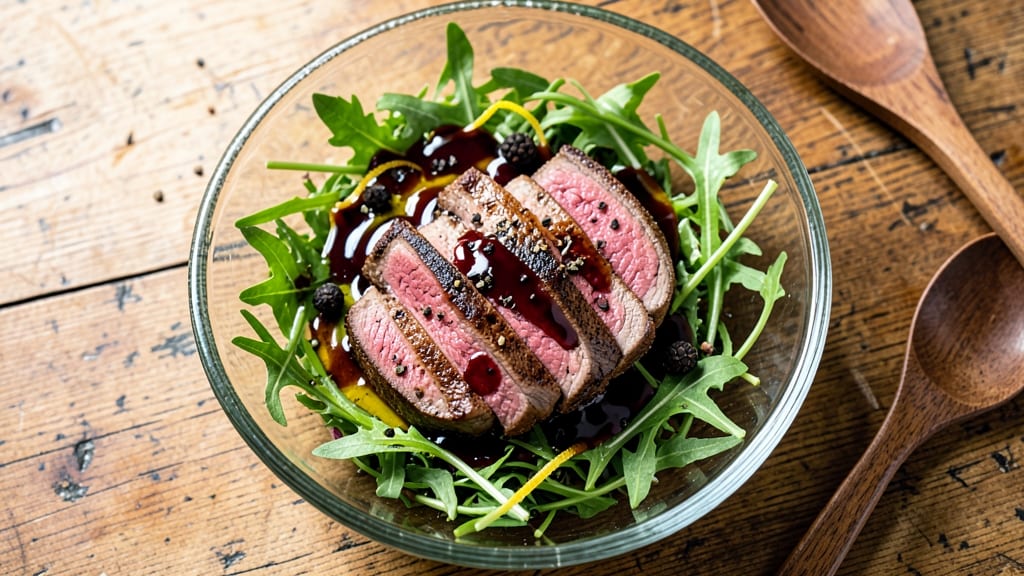
This balsamic steak salad recipe transforms a classic steakhouse meal into a restaurant-worthy dish with crisp greens and caramelized balsamic bites. The secret lies in perfectly seared steak paired with a tangy balsamic reduction that cuts through the richness, creating a balance of flavors that’s both elegant and satisfying.
I developed this recipe after realizing how often restaurant-quality salads could be recreated at home with a few key techniques.
The process starts with a simple yet foolproof method for cooking the steak—searing it to a perfect medium-rare, then resting it before slicing. Meanwhile, the salad comes together with crisp arugula, toasted nuts, and a bright balsamic dressing that ties everything together.
The key is timing: the steak should rest while the dressing is finished, ensuring every bite is warm and flavorful. This isn’t just a salad; it’s a complete meal with protein, texture, and depth.
What makes this dish truly special is how the caramelized balsamic drizzle elevates the steak, adding a sweet-tangy contrast that complements the savory meat. The salad’s crisp greens and crunchy toppings provide the perfect balance, making it feel fresh yet indulgent.
Whether you’re serving this for a weeknight dinner or a weekend lunch, it’s a dish that feels both effortless and impressive.
The plating is just as important as the cooking. Arrange the sliced steak over the greens, drizzle with the balsamic reduction, and finish with a sprinkle of fresh herbs or shaved cheese for an extra touch of sophistication.
This recipe isn’t just about the ingredients—it’s about the experience of bringing a restaurant-quality meal to your table with minimal fuss.
Ingredients for balsamic steak salad
Restaurant-quality steak meets vibrant salad in this elegant yet approachable dish.
| Ingredient | Amount | Notes |
|---|---|---|
| Ribeye Steak 🥩 | 1 lb | 1-inch thick, center-cut preferred |
| Extra-Virgin Olive Oil 🫒 | 2 tbsp | High-quality, fruity variety |
| Kosher Salt 🧂 | 1 ½ tsp | Diamond Crystal preferred |
| Freshly Ground Black Pepper 🌶️ | 1 tsp | Coarse grind recommended |
| Balsamic Vinegar 🍷 | ½ cup | Aged, dark variety preferred |
| Arugula 🌿 | 6 cups | Baby leaves for delicate texture |
| Toasted Walnuts 🥜 | ½ cup | Chopped, lightly toasted |
| Pecorino Romano Cheese 🧀 | ¼ cup | Freshly shaved or grated |
| Garlic Cloves 🧄 | 2 cloves | Minced for balsamic reduction |
| Honey 🍯 | 1 tbsp | Wildflower preferred for depth |
| Fresh Thyme Leaves 🌿 | ¼ cup | Chopped, for garnish |
| Red Wine Vinegar 🍷 | 1 tsp | For balsamic reduction |
| Mustard 🥬 | ½ tsp | Dijon style preferred |
| Crispy Prosciutto 🥓 | 2 oz | Thinly sliced, optional garnish |
The ribeye steak is the foundation—center-cut, 1-inch thick ensures perfect medium-rare throughout. Source from a trusted butcher or Whole Foods for optimal marbling. For the balsamic reduction, aged balsamic vinegar from San Marzano or Balsamic Vinegar of Modena delivers the deepest caramelized flavor. The arugula should be bright green and crisp, so purchase within 24 hours of serving or store in a sealed container with a damp paper towel. Toasting the walnuts in a dry pan for 3-4 minutes enhances their natural sweetness and prevents bitterness.
No aged balsamic? Substitute with 3 tbsp regular balsamic vinegar plus 1 tbsp honey—simmer longer for similar depth. Fresh thyme unavailable? Dried thyme at one-third the amount works, but fresh offers superior aroma. The prosciutto can be omitted for a vegetarian adaptation, but its salty crunch complements the dish beautifully. For the salad dressing, Dijon mustard adds tang, but whole-grain mustard works equally well. If you prefer a smoother texture, blend the dressing ingredients briefly before drizzling. The honey in the reduction balances the acidity—local wildflower honey adds subtle floral notes that elevate the dish.
Steak should rest 10-15 minutes after cooking to retain juices. Store leftovers in airtight containers for up to 3 days, though the salad components are best consumed fresh. The balsamic reduction can be made 2 days ahead and reheated gently—it actually improves in flavor as it reduces further. For meal prep, assemble the salad components separately and combine just before serving to maintain crispness. The dish reheats beautifully, making it ideal for lunches—simply warm the steak slices in a skillet and reassemble over fresh greens.
Why You'll Love This Recipe
- Steak in Minutes: That ribeye hits the pan in 15 minutes flat—no fancy searing tricks, just a hot cast iron and a drizzle of olive oil. I swear, the crust forms faster than you can say "balsamic glaze," and it’s still juicy inside.
- Sweet-Savory Magic: The balsamic reduction caramelizes into this sticky, tangy blanket over the steak, cutting through the richness like a bright red ribbon. Honestly, it’s the kind of flavor that makes you pause mid-bite and go, "Why haven’t I done this sooner?"
- Weeknight to Date Night: Same prep, totally different vibes—throw it together for a lazy Tuesday or dress it up with arugula and shaved parm for a dinner guest. The steak’s bold enough to stand alone, but the salad makes it feel fresh and light.
- Leftovers That Don’t Suck: Cold steak? Still delicious. Slice it up for lunch the next day, toss it in a wrap, or just eat it straight from the fridge—no sad, dry meat here. Between us, I’ve had worse "leftovers" at restaurants.
Step-by-step instructions for caramelized balsamic steak salad
Master the perfect balance of tender steak and vibrant greens with this refined technique.
Prepare the Ribeye with Precision Seasoning
Remove the ribeye steak from the refrigerator and let it sit at room temperature for 15 minutes to ensure even cooking. Pat the steak dry completely with paper towels—this critical step prevents steaming and promotes a perfect sear. Place the steak on a cutting board and season both sides generously with 1.5 teaspoons kosher salt and 1 teaspoon freshly ground black pepper, pressing the seasoning into the meat so it adheres evenly.
Here's the thing—don't rush this step. The salt needs time to penetrate the surface, creating an ideal crust while keeping the interior juicy. I like to let the seasoned steak rest for another 5 minutes before cooking to allow the salt to fully integrate. This preparation ensures maximum flavor infusion and prevents the steak from curling during searing.
Sear the Steak to Develop Deep Flavor
Heat a heavy skillet over high heat until it's smoking hot. Add 2 tablespoons extra-virgin olive oil and let it shimmer for 30 seconds—this ensures proper heat distribution for an excellent sear. Place the seasoned ribeye in the pan and cook undisturbed for 3-4 minutes until a deep golden-brown crust forms on one side. You'll know it's ready when you see those beautiful crosshatch marks from the cast-iron pan.
Flip the steak carefully and cook the second side for another 3-4 minutes for medium-rare doneness. The internal temperature should reach 130-135°F when measured with a meat thermometer. For a 1-inch thick steak, this timing works perfectly—any thicker, and you'll need to adjust. Remove the steak from the pan and let it rest on a cutting board for 10 minutes before slicing. This resting period is non-negotiable; it allows the juices to redistribute throughout the meat.
Create the Balsamic Reduction
While the steak rests, return the empty skillet to medium heat and add 2 minced garlic cloves, cooking for 30 seconds until fragrant. Pour in 0.5 cup balsamic vinegar and 1 teaspoon red wine vinegar, scraping up any browned bits from the bottom of the pan with a wooden spoon. This deglazing captures all the flavorful fond that would otherwise be lost.
Add 1 tablespoon honey and 0.5 teaspoon Dijon mustard to the pan, stirring to combine. Let the mixture simmer for 5-7 minutes until it reduces by half and reaches a syrupy consistency. You're looking for a glossy, caramelized reduction that coats the back of a spoon. If it reduces too quickly, add 1 tablespoon water to control the process. This reduction will tie all the components of your salad together with its complex sweet-savory balance.
Assemble the Salad with Crisp Greens
In a large salad bowl, combine 6 cups arugula with 0.5 cup toasted walnuts and 0.25 cup freshly shaved Pecorino Romano cheese. Gently toss the greens with 1 tablespoon extra-virgin olive oil and 0.25 cup chopped fresh thyme leaves to enhance their natural peppery flavor. The key here is to handle the arugula gently—over-tossing will wilt these delicate leaves and diminish their crisp texture.
Slice the rested ribeye steak against the grain into ¼-inch thick slices and arrange them artfully over the salad base. Drizzle the warm balsamic reduction evenly over the steak, allowing it to cascade down the sides. The heat from the reduction will slightly wilt the arugula, creating the perfect contrast between crisp and tender textures. For an extra touch of sophistication, scatter 2 ounces crispy prosciutto over the top just before serving.
Serve Immediately for Optimal Texture
Divide the balsamic steak salad among 4 plates, ensuring each serving has an equal distribution of steak, greens, and garnishes. The salad should be served immediately to maintain the perfect balance of temperatures and textures. The warm steak and reduction will contrast beautifully with the cool, crisp arugula and toasted walnuts, creating a harmonious bite in every mouthful.
Real talk: This dish shines when presented with confidence. The visual contrast of deep red steak against vibrant green arugula, accented by the glossy balsamic reduction, makes it as impressive as it is delicious. Pair with a crisp white wine or sparkling water with lemon to complement the flavors without overpowering them. The entire process comes together in about 45 minutes, making it perfect for a weeknight dinner that feels special.
Pro Tips For Making Balsamic Steak Salad
- CRANK THE HEAT FIRST: High heat. Seriously, crank it up to screaming hot before adding that ribeye—you’re not searing, you’re forging a crust. I used to start medium-high and wondered why my steaks ended up gray inside with a sad, thin crust. Ribeye needs aggression; give it 2-3 minutes per side until you hear that sizzle like a tiny firework.
- SALT LIKE YOU MEAN IT: Generously coat both sides of the steak with kosher salt before searing—don’t skimp. I was skeptical until I tried it: the salt melts into the surface during cooking, locking in moisture and amplifying the balsamic’s tang later. (Yes, even if you’re impatient like me, wait 10 minutes after salting—your future self will notice.)
- DON’T DROWN THE CRUST: After searing, pull the steak off the pan and let it rest—but resist the urge to deglaze immediately. That crust is fragile; if you add balsamic too soon, you’ll turn it into a sad, sticky glaze instead of a glossy reduction. Let the pan cool for 30 seconds first, then pour in the balsamic. Patience here makes all the difference.
- UPGRADE WITH GARLIC: Toss a couple of smashed garlic cloves into the pan after searing the steak but before adding balsamic. They’ll soften and infuse the reduction with flavor without overpowering the ribeye’s richness. (Skip this if you’re lazy, but the dish is noticeably better when you don’t.)
Common mistakes when making great balsamic steak salad
Overcooking the Steak
One of the biggest mistakes is taking the steak off the heat too early. I’ve seen many home cooks rush this step, resulting in medium-well or even well-done meat that’s dry and tough.
Always use a meat thermometer—aim for 130-135°F for medium-rare, and never exceed 140°F for medium. The 10-minute rest after cooking is non-negotiable; it redistributes juices and keeps your steak succulent. 🌡️
Skipping the Rest
I can’t stress this enough: never slice into your steak immediately after cooking. The moment you cut into it, all those precious juices will escape, leaving you with a dry, flavorless bite.
Let that steak rest for 10-15 minutes on a cutting board before slicing. This simple step transforms a good steak into a restaurant-quality one. Trust me, your taste buds will thank you.
Underseasoning the Salad
The salad base is just as important as the steak, and many cooks underseason it. Arugula needs more than just a drizzle of oil—it craves bold flavors. Don’t be shy with the Pecorino Romano and toasted walnuts.
I like to add an extra pinch of kosher salt and a crack of black pepper right before serving. The balsamic reduction should also be seasoned properly; if it tastes flat, it’s because the vinegar wasn’t balanced with enough honey or mustard. 🧂
Over-Tossing the Greens
Nothing ruins a salad faster than over-tossing the greens. Arugula is delicate—handle it gently! Toss just enough to combine the ingredients lightly. Over-tossing wilts the leaves and turns your crisp salad into a sad, limp mess.
Instead, use two spoons: one to hold the greens and another to gently fold in the toppings. This keeps the texture perfect and the flavors vibrant.
Ignoring the Balsamic Reduction
The balsamic reduction is the star of this dish, yet many cooks rush it or skip it entirely. If you’re not patient enough to reduce the vinegar to a syrupy consistency, you’ll miss out on that deep, caramelized flavor.
Simmer it until it coats the back of a spoon—this takes 5-7 minutes. Pro tip: If it reduces too quickly, add 1 tablespoon water to control the process. The reduction should be glossy and thick, not watery. 🍷
Poor Plating Technique
Presentation matters! Many cooks simply dump the steak and salad onto a plate without thought. Instead, arrange the steak slices artfully over the greens, letting them fan out naturally.
Drizzle the balsamic reduction in a zigzag pattern over the top, and finish with a sprinkle of fresh thyme or prosciutto. The contrast of deep red steak against vibrant greens makes this dish look as good as it tastes. A little effort here goes a long way. ✨
Nutrition facts
Frequently asked questions
Can I use a different cut of steak for this recipe?
While ribeye works beautifully, you can also use filet mignon or New York strip for a leaner option. For best results, choose a cut that's 1-inch thick and has good marbling. Avoid overly lean cuts like sirloin—they tend to dry out more quickly during cooking. Adjust the cooking time slightly if using a different thickness.
How do I make this salad ahead of time?
Prepare the components separately for best results. Cook the steak and let it cool completely, then slice and store in an airtight container for up to 3 days. Make the balsamic reduction ahead and store it in the fridge—it actually tastes better after reducing further! Assemble the salad just before serving to maintain crispness. Reheat steak slices in a skillet for 1-2 minutes before plating.
What if I don't have aged balsamic vinegar?
No problem! Mix 3 tablespoons regular balsamic vinegar with 1 tablespoon honey and simmer for 8-10 minutes to create a similar caramelized effect. The reduction might be slightly thinner, but it will still add great depth of flavor. For extra richness, add a pinch of Dijon mustard to the mixture while reducing.
Can I make this salad vegetarian?
Yes, but with some adjustments. Replace the steak with grilled portobello mushrooms or crispy tofu slices. For texture, add roasted chickpeas or crispy prosciutto (if you're okay with pork). The balsamic dressing and salad components will still work beautifully, just focus on creating a satisfying protein alternative that holds up to the rich flavors.
How do I know when the balsamic reduction is done?
The reduction is ready when it coats the back of a spoon and has reduced by about half. It should be glossy and syrupy, not watery. If it's reducing too quickly, add 1 tablespoon water to control the process. The perfect consistency will be thick enough to cling to the steak slices but still pour smoothly. This typically takes 5-7 minutes of simmering.