
Salads
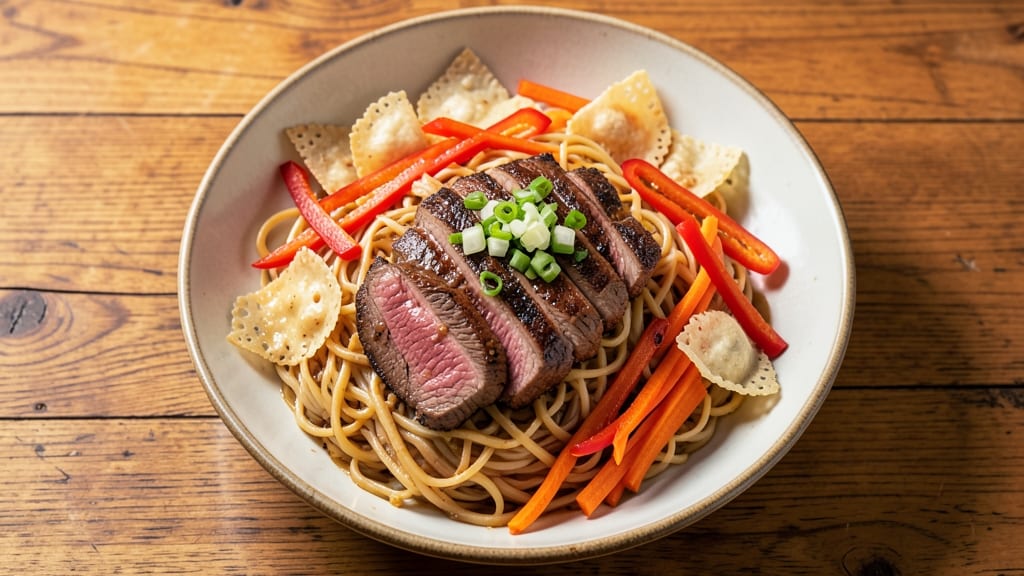
This Asian beef noodle salad recipe delivers crispy wonton strips and a tangy sesame dressing that perfectly balances sweet, spicy, and umami flavors. After years of testing different techniques, I've perfected a method that ensures tender beef, chewy noodles, and that signature crunch from properly fried wonton strips.
The key lies in marinating the beef just right and achieving the perfect crispness without overpowering the fresh ingredients.
The salad's foundation is a simple yet flavorful sesame dressing that ties everything together with its nutty, slightly sweet profile. You'll start with thinly sliced flank steak marinated in soy sauce, garlic, and ginger, then quickly seared to maintain tenderness.
The wonton strips are the star—lightly battered and fried until golden, adding a satisfying crunch that contrasts beautifully with the soft noodles and fresh vegetables.
What makes this dish truly special is how the components come together: tender beef, chewy rice noodles, crisp wonton strips, and crunchy vegetables all coated in that addictive sesame dressing.
The result is a refreshing yet hearty salad that's perfect for lunch or dinner, with enough flavor to satisfy even the pickiest eaters. Every bite delivers a perfect balance of textures and tastes.
This recipe is designed to be both restaurant-quality and home-friendly, with techniques that are approachable yet impressive. Whether you're serving it as a light meal or bringing it to a potluck, the combination of flavors and textures will leave everyone asking for seconds.
Let's get started on creating this satisfying dish that's as beautiful as it is delicious.
Ingredients for asian beef noodle salad
Crispy wonton strips and tender beef make this salad a crowd-pleaser every time.
| Ingredient | Amount | Notes |
|---|---|---|
| Flank Steak 🥩 | 1 ½ lb | Thinly sliced against grain |
| Wonton Wrappers 🥟 | 1 package | Square wonton sheets |
| Rice Noodles 🍜 | 8 oz | Thin rice noodles (vermicelli) |
| Carrots | 2 medium | Julienned into matchsticks |
| Red Bell Pepper 🌶️ | 1 medium | Thinly sliced |
| Green Onions 🧅 | 4 whole | White and green parts separated |
| Sesame Oil 🫒 | 2 tbsp | Toasted sesame oil |
| Soy Sauce 🥄 | ½ cup | Low-sodium preferred |
| Rice Vinegar 🍶 | ¼ cup | Seasoned preferred |
| Peanut Butter 🥜 | 2 tbsp | Natural, unsweetened |
| Sesame Seeds 🌿 | 2 tbsp | Toasted for garnish |
| Garlic Cloves 🧄 | 4 cloves | Minced for marinade |
| Fresh Ginger 🌿 | 1 inch | Peeled and grated |
| Vegetable Oil 🫒 | ½ cup | For frying wontons |
| All-Purpose Flour 🌾 | ¼ cup | For wonton batter |
| Salt 🧂 | 1 tsp | Kosher or sea salt |
| Black Pepper 🌶️ | ½ tsp | Freshly ground |
The flank steak is your secret weapon here—look for well-marbled cuts at Whole Foods or your local butcher shop. Slice it thinly against the grain, and don't skip the marinade of soy sauce, garlic, and ginger. For the wonton wrappers, Trader Joe's has the best quality in a package—just check the expiration date, as they dry out fast. The rice noodles should be fresh, not pre-soaked, so grab them from the refrigerated section. If you can't find thin rice noodles, vermicelli works perfectly too. The carrots and bell pepper need to be julienned for that perfect crunch—a mandoline makes this job a breeze.
No wonton wrappers? Substitute rice paper wrappers—they fry up crispy too. Running out of sesame oil? Toasted sesame seeds plus a little vegetable oil works in a pinch. For the dressing, if you don't have peanut butter, almond butter gives a similar richness. The green onions are divided—white parts go in the dressing, green parts get chopped for garnish. Want extra crunch? Add some crushed peanuts on top. The key to crispy wonton strips is frying them in small batches—overcrowding kills the crunch. And trust me, freshly toasted sesame seeds make all the difference.
Store the cooked beef and noodles separately in airtight containers for up to 3 days—they keep best that way. The wonton strips lose crispiness fast, so fry them fresh or store them in a single layer on paper towels. The dressing stays good for 5 days in the fridge. For a quick meal, prep everything ahead and assemble when ready to eat. This salad reheats beautifully—just toss with a splash of water or soy sauce to revive the noodles. And if you make extra dressing? Freeze it in ice cube trays for easy single-serving portions later.
Why You'll Love This Recipe
- 20-Minute Steak Magic: I swear, the flank steak here transforms from tough to tender in one quick sear and slice—no fancy marinating. Thin strips? Done in 5 minutes flat. Honestly, the hardest part is deciding whether to eat it immediately or wait for the noodles.
- Crunchy-Creamy Balance: That crunch from the shredded carrots and bell pepper cuts through the rich, savory beef while the peanut or sesame dressing ties it all together. Between us, the first bite always makes me pause—it’s the kind of dish where you forget to breathe.
- Lunchbox Hero: Pack it cold for work or school—no reheating needed. The noodles hold up perfectly, and the beef stays juicy. My daughter’s favorite? She’ll trade her sandwich for this any day, and it’s way cheaper than takeout.
- Budget Stretch: Flank steak’s affordable, and you’re using every bit—no waste. The wonton wrappers add a fun texture without breaking the bank, and rice noodles last forever. I’ll be real: this is my go-to when grocery money’s tight but I still want flavor.
Step-by-step instructions for crispy wonton strips and tangy sesame dressing
Here's how to create restaurant-quality texture and flavor with simple techniques.
Marinate and Slice the Flank Steak
In a bowl, combine the 0.5 cup soy sauce, 2 tbsp peanut butter, 1 tbsp sesame oil (save the remaining 1 tbsp for later), 4 cloves minced garlic, 1 inch grated ginger, 0.5 tsp black pepper, and 1 tsp salt. Mix until the peanut butter is fully incorporated and smooth.
Add the 1.5 lb flank steak to the marinade, turning to coat evenly. Cover and refrigerate for at least 30 minutes—this ensures tender, flavorful slices. While it marinates, slice the steak thinly against the grain into ¼-inch thick strips. The grain runs lengthwise, so look for those muscle fibers and cut perpendicular to them for maximum tenderness.
Prepare the Crispy Wonton Strips
In a shallow bowl, whisk together the remaining 1 tbsp sesame oil with the 0.25 cup all-purpose flour. Dip each wonton wrapper into the mixture, letting any excess drip off, then lay them on a parchment-lined baking sheet. Repeat until all 1 package wonton wrappers are coated.
Heat 0.25 cup vegetable oil in a large skillet over medium-high heat until shimmering. Fry the wonton strips in batches for 1-2 minutes per side until they turn a beautiful golden brown and crisp. Drain on paper towels and keep warm—they'll stay crispy for several minutes. The key here is high heat and not overcrowding the pan, or they'll steam instead of crisp.
Cook the Rice Noodles and Vegetables
Bring a pot of water to a boil and add the 8 oz rice noodles. Cook for 2-3 minutes until they're tender but still slightly chewy. Drain immediately and rinse under cold water to stop the cooking process. Toss with 1 tbsp sesame oil to prevent sticking.
While the noodles cook, julienne the 2 medium carrots into matchsticks and thinly slice the 1 medium red bell pepper. Separate the 4 whole green onions into white and green parts. Blanch the carrots and bell pepper in boiling water for 1 minute, then shock in ice water to maintain their vibrant color. Drain and set aside.
Assemble the Tangy Sesame Dressing
In a small bowl, whisk together the remaining 1 tbsp sesame oil, 0.25 cup rice vinegar, 2 tbsp peanut butter, 1 tbsp soy sauce, and 1 tsp sesame seeds. Thin with 2-3 tablespoons water until it reaches a pourable consistency—it should coat the back of a spoon but still flow easily. Taste and adjust seasoning with additional soy sauce or rice vinegar as needed.
This dressing is where the magic happens. The peanut butter adds richness, the rice vinegar brings tang, and the sesame oil ties everything together. The texture should be silky, not grainy, so whisk vigorously to emulsify. If it separates, just give it another quick whisk before using.
Combine and Garnish
In a large serving bowl, combine the cooked rice noodles, blanched vegetables, and marinated steak strips. Drizzle with the tangy sesame dressing and toss gently to coat everything evenly. The dressing should cling to the noodles and vegetables without making them soggy.
Garnish with the remaining 1 tbsp sesame seeds and the separated green onion tops. Serve immediately while the wonton strips are still crispy and the dressing is at its best. This dish is all about contrast—crispy wontons, tender steak, chewy noodles, and that perfect balance of sweet, tangy, and savory flavors.
Pro Tips For Making Asian Beef Noodle Salad
- Slice Steak Against the Grain: I learned this the hard way—thinly slicing flank steak with the grain first, then rotating 45 degrees for the final cut. The fibers stay intact, so every bite melts instead of fighting your teeth. Use a sharp knife and don’t rush; you’re not carving a turkey here.
- Blanch Wonton Wrappers First: Skip the dry-frying if you’re short on time, but do blanch the wonton wrappers in hot oil for 10 seconds per side until they puff just slightly. This crisps them up without burning, and they’ll hold their shape better when tossed with the salad. (Yes, even if you’re impatient like me.)
- Soak Noodles in Ice Water: Rice noodles stick like glue when overcooked. Boil them for 30 seconds less than the package says, then immediately plunge them into ice water for 2 minutes. They’ll firm up perfectly—no mushy texture, no reboiling needed.
- Julienne Veggies Uniformly: Carrots and bell peppers should be cut into matchsticks of exactly the same length. Use a mandoline if you’re feeling fancy, or just eyeball it: aim for 1/8-inch thickness. Uniform pieces cook evenly and look polished—no sad, half-mushy veggies in your bowl.
Perfect pairings for this asian beef noodle salad
Crispy Garnishes
Freshly toasted sesame seeds add a nutty crunch that elevates every bite—heat 1 tbsp sesame seeds in a dry skillet over medium heat for 1-2 minutes until golden and fragrant. Sprinkle them over the salad just before serving to preserve their crispness.
For extra texture, add crushed roasted peanuts—toss ¼ cup peanuts in ½ tsp soy sauce and ½ tsp sesame oil, then toast in the same skillet for 2-3 minutes. 🌟
Herb Finishes
Brighten the salad with fresh herbs that complement the Asian flavors. Thinly slice ¼ cup cilantro or mint leaves and toss them into the dressing before combining with the salad. For a more complex flavor, add ½ tsp Thai basil—its anise notes pair beautifully with the peanut and sesame.
The herbs should be added last to keep their vibrant color and freshness intact.
Pickled Vegetables
Add a tangy contrast with quick-pickled vegetables. Thinly slice ½ cup daikon radish and ½ cup cucumber, then toss with 2 tbsp rice vinegar, 1 tsp sugar, and a pinch of salt.
Let sit for 15 minutes before adding to the salad. The crisp texture and bright acidity cut through the richness of the beef and peanut dressing beautifully.
Protein Swaps
For a vegetarian version, replace the beef with crispy tofu or marinated mushrooms. Press and slice 1 block extra-firm tofu into strips, then pan-fry in 1 tbsp vegetable oil until golden.
Marinate 8 oz shiitake mushrooms in 2 tbsp soy sauce, 1 tbsp sesame oil, and 1 tsp grated ginger for 15 minutes before cooking. Both alternatives maintain the dish's satisfying texture contrast.
Dressing Variations
Customize the dressing to suit your taste preferences. For a spicier kick, add ½ tsp chili garlic sauce or ¼ tsp red pepper flakes to the dressing. A sweeter version can be achieved by adding 1 tsp honey or ½ tsp maple syrup.
For a tangier profile, increase the rice vinegar to 3 tbsp and reduce the peanut butter to 1 tbsp. Adjust to taste—this is where the magic happens! 💫
Beverage Pairings
Complement the salad's bold flavors with a refreshing jasmine iced tea or a crisp Asian lager. The floral notes of jasmine tea balance the peanut and sesame, while a Sapporo or Asahi beer cuts through the richness.
For a non-alcoholic option, try a lychee lemonade—its sweet-tart profile enhances the salad's complexity. Serve chilled for the best experience.
Nutrition facts
Frequently asked questions
Can I use pre-cooked rice noodles for this recipe?
While you can use pre-cooked rice noodles, they won't have the same chewy texture. For best results, use fresh rice noodles that require cooking—just boil for 2-3 minutes until tender but still slightly firm. If you must use pre-cooked, soak them in warm water for 10 minutes first to revive their texture, then drain well. The key is preventing soggy noodles that ruin the salad's crisp contrast.
How do I prevent the wonton strips from getting soggy?
Keep them crispy by frying in small batches and draining on paper towels. Store any extras in a single layer on a wire rack (not stacked) to maintain airflow. For serving, place the wonton strips on top of the salad rather than mixing them in—this preserves their crunch. If reheating, warm them in a dry skillet for 30 seconds just before serving.
What's the best way to slice flank steak for this dish?
Slice against the grain into ¼-inch thick strips—this ensures tender bites. Freeze the steak for 20 minutes first to firm it up, then slice using a sharp knife. For extra tenderness, marinate for 1-2 hours (not longer than 4 hours) to prevent overcooking. The grain runs lengthwise, so look for those visible muscle fibers when slicing.
Can I make this salad ahead of time?
Yes, but assemble it last minute. Cook the beef and noodles separately, then store in airtight containers for 3 days. Keep the wonton strips separate and fry fresh before serving. For the dressing, make it up to 5 days ahead—just whisk before using. The key is keeping components separate until the final toss to maintain crispness.
What vegetables can I substitute if I don't have carrots or bell peppers?
Try julienned cucumber, shredded cabbage, or thinly sliced zucchini. For extra crunch, add shredded radishes or snap peas. Just blanch them for 1 minute to soften slightly—this maintains their texture when tossed with the dressing. The vegetables should complement the salad's chewy noodles and crispy wontons.