
Salads
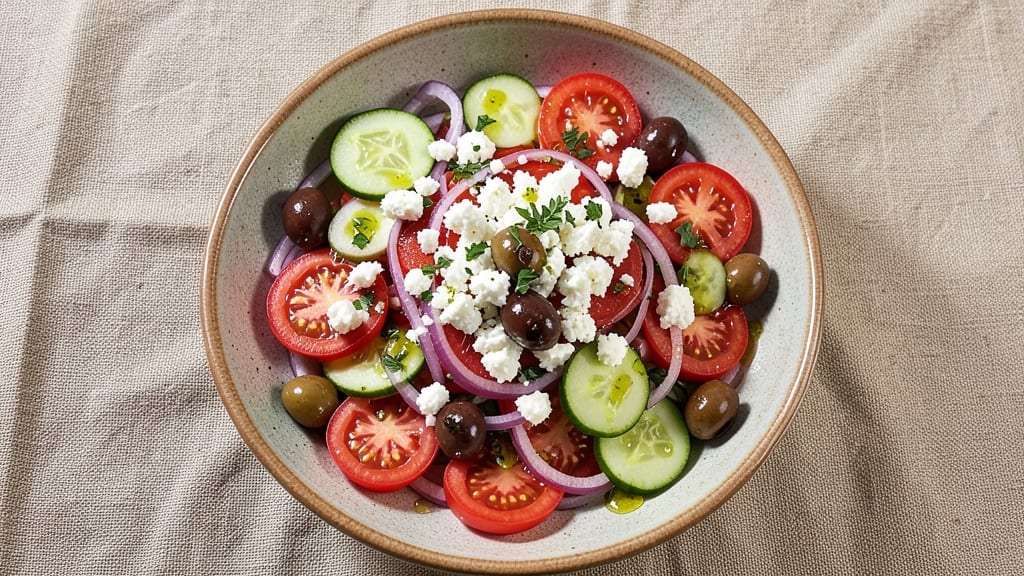
This American Greek salad recipe delivers the perfect balance of crisp vegetables, briny olives, and tangy feta—all coming together in a refreshing, restaurant-quality dish. The secret lies in the freshness of the ingredients and the bright, zesty dressing that ties everything together.
I've perfected this salad over years of summer gatherings, ensuring it's simple enough for weeknight dinners but impressive enough for entertaining.
The classic combination of ripe tomatoes, crisp cucumbers, and Kalamata olives creates a symphony of textures and flavors, while the feta adds that signature salty tang. This recipe stays true to tradition but includes modern twists like avocado or grilled chicken for added depth.
The dressing is where the magic happens—a blend of olive oil, lemon juice, and oregano that brightens every bite.
What you'll end up with is a vibrant, crunchy salad that's as satisfying as it is refreshing. The vegetables stay crisp, the feta melts slightly for creaminess, and the dressing coats every ingredient perfectly.
It's the kind of dish that's light enough for a summer lunch but hearty enough to be a main course.
Perfect for picnics, potlucks, or a quick weeknight meal, this salad comes together in just 15 minutes. Serve it alongside grilled meats or on its own with warm pita bread. Here's how to make it—simple, classic, and full of flavor.
Ingredients for american greek salad
Fresh vegetables, briny olives, and tangy dressing create this restaurant-quality American Greek salad.
| Ingredient | Amount | Notes |
|---|---|---|
| Ripe Tomatoes 🍅 | 2 lb | Heirloom or vine-ripened preferred |
| English Cucumbers 🥒 | 2 whole | Peeled and sliced into half-moons |
| Kalamata Olives 🫒 | 1 cup | Pitted and drained from jar |
| Red Onion 🧅 | 1 whole | Thinly sliced, soak in cold water |
| Crumbled Feta Cheese 🧀 | 1 cup | High-quality, brined feta preferred |
| Extra-Virgin Olive Oil 🫒 | ½ cup | Fruity, peppery variety recommended |
| Fresh Lemon Juice 🍋 | ¼ cup | From 2-3 fresh lemons |
| Fresh Dill 🌿 | ¼ cup | Chopped, stems removed |
| Fresh Oregano 🍃 | 1 tbsp | Finely chopped, or dried substitute |
| Diamond Crystal Kosher Salt 🧂 | 1 tsp | For seasoning and dressing |
| Black Peppercorns 🌶️ | ½ tsp | Freshly cracked for best flavor |
| Avocado 🥑 | 1 whole | Ripe, pitted and sliced |
| Red Wine Vinegar 🍷 | 1 tbsp | For dressing acidity balance |
| Honey 🍯 | 1 tbsp | Optional for dressing sweetness |
The tomatoes and cucumbers are the foundation—look for vibrant, firm produce at your local market. Whole Foods or Trader Joe's carry excellent heirloom tomatoes, while Costco offers bulk cucumbers at great prices. For the olives, Kalamata from a glass jar (not the canned variety) delivers that signature briny flavor. The feta should be crumbled fresh from a block—pre-shredded lacks that authentic texture. If you're adding avocado, choose ripe but firm fruit that yields slightly to gentle pressure.
No fresh dill? Dried dill at one-third the amount works in a pinch, though fresh is ideal. Substituting red onion? Yellow or white onion works too, but soak it longer to mellow the sharpness. For the dressing, lemon juice is non-negotiable—bottled won't cut it. Need to skip honey? Maple syrup at half the amount keeps it vegan. The olive oil should be extra-virgin and fruity—none of that cheap cooking oil. And if you're making this ahead, hold off on adding the tomatoes and avocado until serving to prevent browning.
This salad keeps best when assembled just before serving—the vegetables stay crispest that way. Store components separately in airtight containers for up to 3 days: vegetables in one, dressing in another, and feta/olives in a third. The dressing can be made 2 days ahead and stored in the fridge. For maximum freshness, add the avocado and tomatoes last minute. If prepping for a crowd, double the dressing and store it in a sealed jar—shake well before using. The feta will soften slightly over time, which actually enhances the flavor when mixed with the dressing.
Why You'll Love This Recipe
- No-Chopping Needed: I’ll be real—this salad takes zero knife work if you buy pre-sliced cucumbers and cherry tomatoes. Just toss everything raw, add the olives and feta, and you’re done. That’s my kind of meal.
- Salty-Sweet Magic: The briny Kalamata olives and crumbled feta turn the sweet tomatoes and crisp cucumbers into something ridiculously addictive. One bite and you’ll understand why this is my go-to summer side.
- Picnic to Potluck: Honestly? This salad works everywhere. Pack it in a jar for lunch, bring it to BBQs, or serve it alongside grilled chicken—it’s the one dish that never lets you down. My college friends still ask for it at parties.
- Budget-Friendly Staple: You can make this for under $5 and stretch it across three meals. The feta and olives feel fancy, but they’re actually the most affordable way to add serious flavor without breaking the bank. (Yes, even on a Tuesday night.)
Step-by-step instructions for American Greek salad
Assemble this iconic salad with precision—where freshness meets bold Mediterranean flavors.
Prepare the Base Vegetables
Begin by washing the 2 lb ripe tomatoes thoroughly and cutting them into ½-inch thick slices. I prefer heirloom varieties for their sweetness and texture, but any ripe tomato will work. Remove the stems and discard any bruised areas—these can make the salad taste bitter.
Next, peel the 2 whole English cucumbers using a vegetable peeler, then slice them into ½-inch thick half-moons. The peeling removes excess moisture that can make the salad watery. Place both the tomato and cucumber slices in a large mixing bowl and set aside.
For the 1 whole red onion, slice it thinly using a sharp chef's knife or mandoline. Immediately transfer the slices to a colander and soak them in cold water for 10 minutes to mellow their sharpness. Drain well before adding to the salad—this step makes all the difference in balancing flavors.
Add the Olives and Feta
Drain the 1 cup Kalamata olives thoroughly using a fine-mesh strainer, removing any brine or excess liquid. Add them directly to the bowl with the tomatoes and cucumbers. The olives should be evenly distributed—this ensures each bite has that signature briny punch.
Gently fold in the 1 cup crumbled feta cheese, breaking it into small, even pieces. I recommend using high-quality, brined feta for its salty tang. Avoid pressing down on the feta—this releases moisture that can make the salad soggy. Instead, let it sit on top of the vegetables until ready to toss.
Create the Dressing
In a small bowl, whisk together the 0.5 cup extra-virgin olive oil, 0.25 cup fresh lemon juice, 1 tbsp red wine vinegar, and 1 tbsp honey. The honey adds subtle sweetness that balances the acidity, while the vinegar ensures the dressing cuts through the richness of the olive oil.
Add the 1 tbsp finely chopped fresh oregano, 0.25 cup chopped fresh dill, 1 tsp Diamond Crystal kosher salt, and 0.5 tsp freshly cracked black peppercorns. The herbs should be finely chopped to distribute evenly—no large stems or whole leaves. Taste the dressing and adjust seasoning if needed; the salad's flavors will intensify as they sit.
Assemble and Toss
Drain the red onion slices thoroughly and add them to the bowl with the other vegetables. Pour the dressing over the top and gently toss everything together using a large salad spatula. Work quickly but carefully—you want to coat the vegetables evenly without crushing them.
Let the salad sit for 5 minutes before serving. This resting period allows the flavors to meld and the dressing to absorb slightly, ensuring each bite is perfectly balanced. The tomatoes should be juicy but not dripping, and the cucumbers should retain their crisp texture.
Garnish and Serve
Just before serving, pit and slice the 1 whole avocado into ¼-inch thick slices. Arrange the avocado slices on top of the salad, fanning them out for visual appeal. The creamy avocado adds a luxurious contrast to the crisp vegetables and tangy feta.
Serve immediately with warm pita bread or crusty bread on the side. The salad should be vibrant, with bright colors and a harmonious blend of textures—crisp vegetables, creamy feta, and briny olives. Each bite should deliver a perfect balance of sweet, salty, tangy, and fresh flavors.
Pro Tips For Making American Greek Salad
- CHILL THE CUCUMBERS: English cucumbers hold more water than you’d think—give them a 30-minute ice bath before slicing. I learned this the hard way after serving a salad that dripped like a swamp. Pat them dry afterward, or your dressing will turn into soup.
- SALT THE TOMATOES: Toss halved tomatoes with ½ teaspoon salt and let them sit for 10 minutes before assembling. This draws out excess water and makes them taste brighter. Skip this, and your salad will feel sad and limp.
- DON’T SKIP THE ONION SOAK: Thinly slice the red onion and soak it in ice water for 5 minutes to mellow the bite. I was skeptical until I tried it—now it’s non-negotiable. Drain well before adding to the salad.
- UPGRADE THE FETA: Use room-temperature feta straight from the fridge—no need to thaw. For extra richness, mix in a spoonful of olive oil with the crumbles. Sounds weird, but it works: the cheese stays creamy and coats every bite better.
Dietary considerations for american greek salad
Vegetarian-Friendly Base
This salad is naturally vegetarian, thanks to its foundation of fresh vegetables, briny olives, and creamy feta. The 1 cup Kalamata olives and 1 cup crumbled feta cheese provide rich, umami flavors without any meat.
For extra protein, toss in ½ cup cooked chickpeas or ¼ cup toasted pine nuts—both add satisfying texture while keeping it plant-based. 🌱
Dairy-Free Adaptations
Skip the feta for a dairy-free version and replace it with ½ cup vegan feta (brands like Violife work well) or ¼ cup marinated artichoke hearts for a briny alternative.
Use coconut yogurt instead of feta in the dressing—mix 2 tbsp coconut yogurt with 1 tbsp lemon juice and 1 tsp Dijon mustard for tangy depth. The avocado and olives will still deliver that creamy, rich contrast.
Gluten-Free Considerations
This salad is already gluten-free, but watch the bread you serve on the side. Opt for gluten-free pita (brands like Canyon Bakehouse or Schar) or crusty gluten-free baguette.
Double-check labels on olives and dressings—some brands add gluten-containing additives. The salad itself requires no adjustments, making it a safe bet for gluten-sensitive guests.
Nut-Free Options
If nut allergies are a concern, avoid pine nuts or almonds in variations. Stick to the classic ingredients—tomatoes, cucumbers, olives, and feta—for a foolproof nut-free version.
For extra crunch, add ¼ cup sunflower seeds or ½ cup toasted pumpkin seeds instead. These seeds provide a similar texture without the risk of cross-contamination.
Low-Carb Adjustments
To reduce carbs, skip the bread entirely and focus on the salad's vibrant vegetables. Replace ½ cup cucumbers with ½ cup sliced radishes for a peppery kick. For a low-carb protein boost, add ½ cup grilled chicken breast (cooked separately) or ¼ cup crumbled goat cheese instead of feta.
The dressing remains unchanged, keeping the salad light and flavorful.
Allergen Awareness
Always check labels on store-bought ingredients like olives (some contain added sulfites) and feta (may include dairy additives). For a soy-free option, avoid soy-based dressings and stick to olive oil, lemon, and vinegar. If sesame allergies are a concern, skip sesame oil in dressings and use avocado oil instead.
Fresh ingredients like tomatoes, cucumbers, and herbs are naturally allergen-free, making this salad a safe choice for many dietary needs. 💡
Nutrition facts
Frequently asked questions
Can I make this salad ahead of time?
Yes, but with a few key adjustments. Store the dressing separately in an airtight container and keep the vegetables (except tomatoes and avocado) in another container for up to 3 days. Mix everything together just before serving to maintain crispness. The feta will soften slightly, which actually enhances the flavor when combined with the dressing.
What's the best way to store leftover dressing?
Transfer the dressing to a clean, airtight jar or container and refrigerate for up to 5 days. Give it a good shake before using, as the olive oil may separate. If the dressing thickens, thin it with a splash of water or extra lemon juice. The herbs will keep their flavor better when stored this way.
How can I make this salad more substantial for a main course?
Add protein with ½ cup grilled chicken breast, ½ cup chickpeas, or ¼ cup white beans for a hearty vegetarian option. For extra texture, fold in ¼ cup toasted pine nuts or ½ cup crumbled goat cheese. The salad will hold together well and feel satisfying enough to serve as the main dish.
Why does my feta get soggy?
Soggy feta usually happens when it's pressed into the salad or when the vegetables release too much moisture. To prevent this, add the feta just before tossing and avoid packing it down. Also, pat cucumbers and tomatoes dry with a paper towel before adding them to the salad. If using pre-cut veggies, drain them well before assembling.
Can I use bottled salad dressing instead?
While it's possible, homemade dressing makes all the difference! Bottled dressings often lack the fresh herbs and bright acidity that elevate this salad. If you're short on time, choose a high-quality olive oil and lemon vinaigrette, but add fresh dill and oregano to mimic the homemade flavor. For best results, stick with the recipe's dressing.